Author: adminus1

  • The Boy With the Flag — Normandy, France, 1944 .US
    The Boy With the Flag — Normandy, France, 1944 .US

    The Boy With the Flag — Normandy, France, 1944

    The summer of 1944 was not a summer of laughter in Normandy. It was a season of ashes, of walls reduced to rubble, of children who no longer played but simply survived. The land still trembled with the echoes of artillery fire, the air carried the acrid memory of smoke and blood. In this shattered landscape, the cost of war was measured not only in broken buildings but in broken lives.

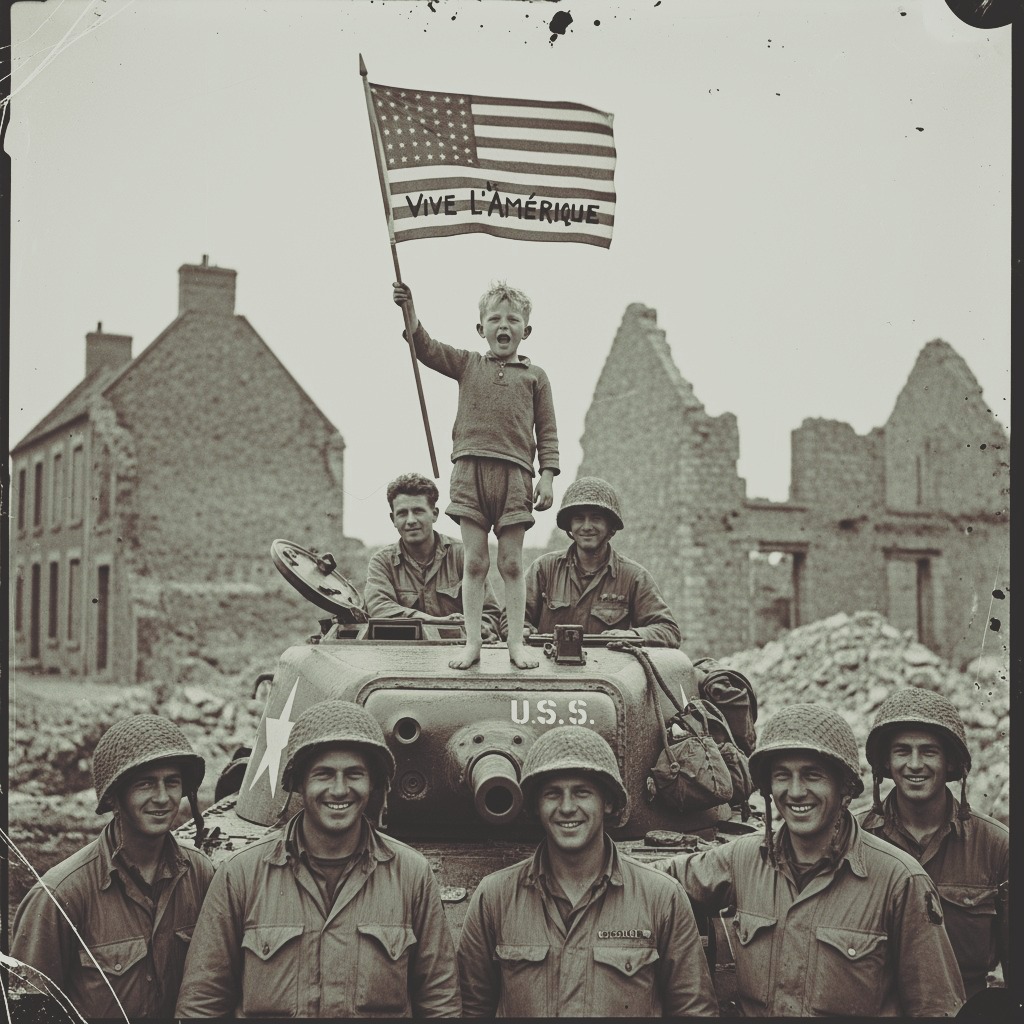
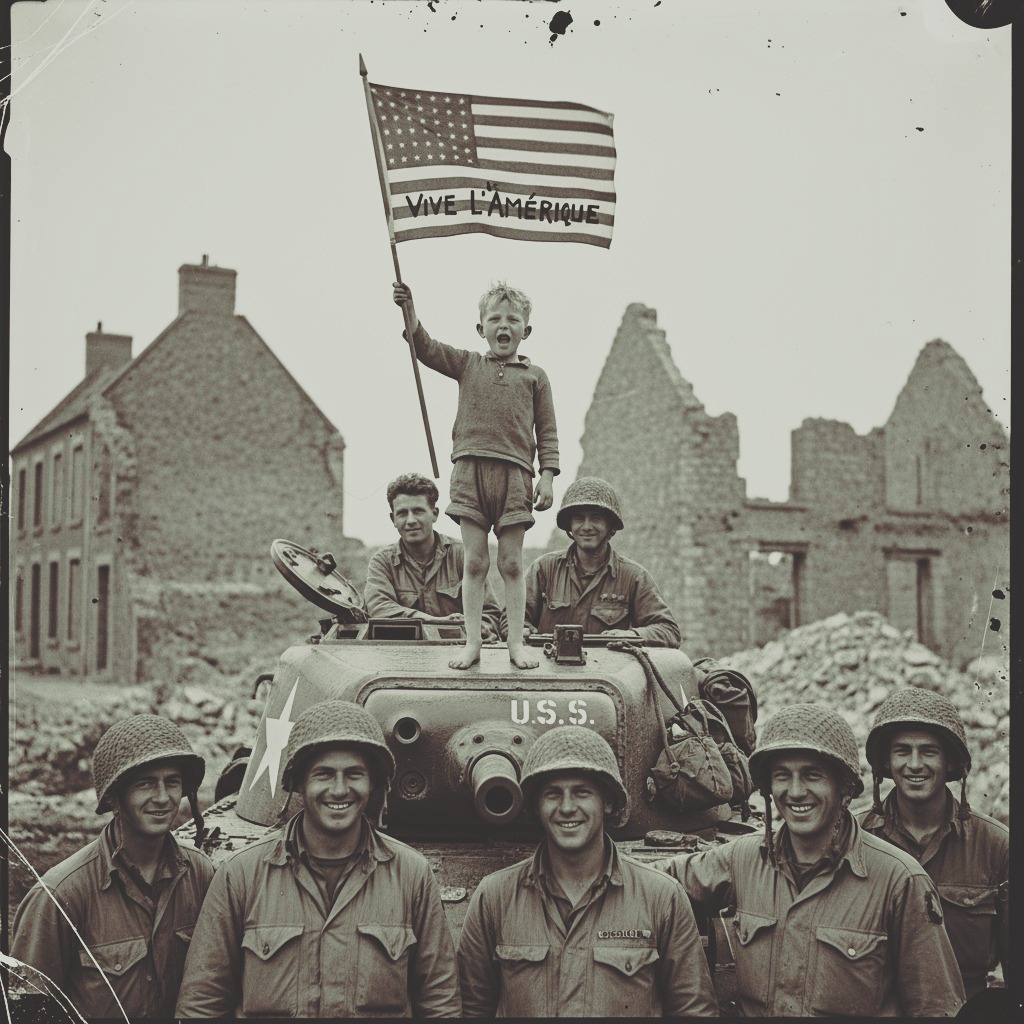
    Among the ruins of a small village, where the church bell tower lay shattered and homes stood as hollow shells, a boy appeared. He was barefoot, his small frame thin from hunger, his hair matted with dust. But in his hands he carried something extraordinary: a flag. It was no pristine banner sewn in a factory; it was stitched from scraps of fabric, threads pulled from abandoned clothes, fragments salvaged from what the occupation had left behind. Its stripes were uneven, its colors faded, but to him, it was a symbol stronger than steel.

    The soldiers of the United States Army had just entered the village. Their Sherman tank rattled across the cobblestones, the men inside weary from weeks of fighting since D-Day. They had seen too many dead, too many towns destroyed, too many eyes staring back at them hollow with grief. War had hardened them, turned them into men of iron, but still, beneath the helmets and uniforms, they longed for reminders of why they endured the brutality.

    And then they saw him—the boy with the flag.

    He stepped forward, unafraid, and with all the strength his small body could muster, he waved the banner and cried out in a voice that cracked the silence:

    “Vive l’Amérique!”

    The shout echoed through the devastated streets. It was more than words—it was defiance, gratitude, hope, all bound together in the cry of a child who had lost everything but refused to surrender to despair.
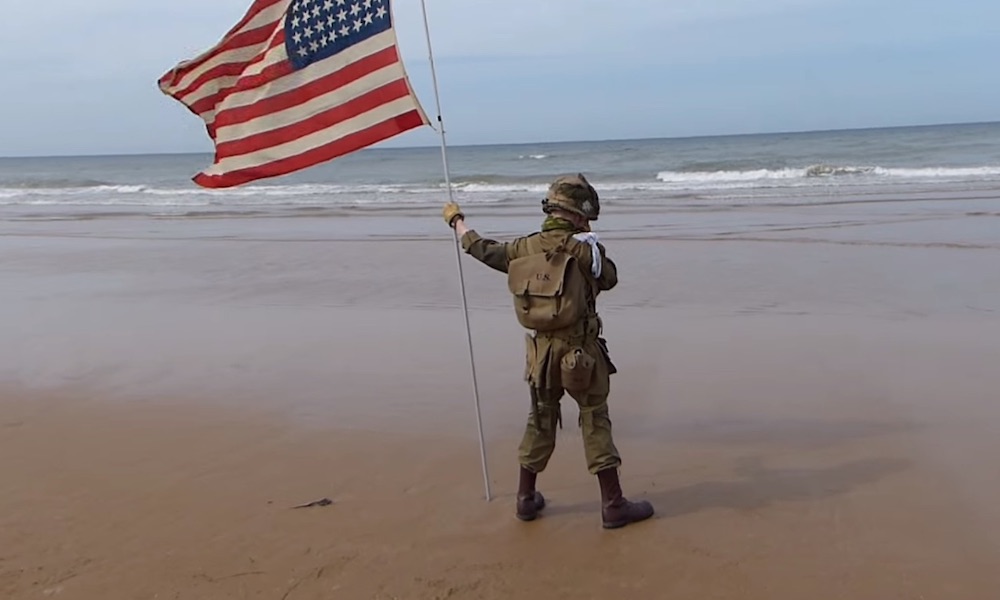
    The tank ground to a halt. The soldiers, stunned by the sight, beckoned him closer. One reached down and pulled him onto the hull. Standing barefoot on the steel, his tiny figure seemed impossibly brave against the backdrop of ruins. He raised the flag higher, his voice stronger now, carrying across the rubble like a hymn of freedom.

    For the soldiers, it was a moment that cut through the fog of war. They smiled—some even laughed, not with mockery but with relief, as if for the first time in weeks they remembered what victory meant. They weren’t just fighting to push back an enemy; they were fighting for this boy, for his future, for the right of a child to raise a flag instead of a weapon.

    Yet the boy’s story was already marked by tragedy. His parents had been executed months earlier, victims of occupation and reprisal. He had hidden in barns, slept in cold cellars, and survived on the kindness of neighbors who themselves had little to give. Each day was a battle of endurance, yet in the ruins of his childhood, he found the strength to sew together scraps into a flag of liberation. He had no family left to call his own—but in that moment, standing on the tank, he felt he belonged to something greater.

    One of the GIs would later write in his worn leather journal:

    “We came into Normandy with rifles and tanks, but that boy met us with something more powerful. He held up a flag and reminded us what we were really fighting for. I never knew his name, but I knew we had given him back a future.”

    The boy’s flag became a symbol among the soldiers, passed from one unit to another, a reminder that amid destruction there could still be creation, that amid grief there could still be hope. For the villagers, the sight of the child standing barefoot on American steel was proof that liberation had finally arrived.

    History remembers battles by dates and maps, by casualties and statistics. But sometimes, history is best remembered in the face of a single child holding a flag against the sky. The boy’s cry—“Vive l’Amérique!”—was not just for the soldiers; it was for every lost voice silenced by war, every family torn apart by cruelty, every dream buried under the rubble of occupation.

    The Holocaust, the camps, the executions—these were the shadows that lingered over Europe. And yet, in the heart of Normandy, a child lifted a flag and chose hope over despair. That act of courage, simple yet profound, became part of the tapestry of liberation.

    To this day, the image of that boy with his fragile banner speaks louder than the roar of tanks. It tells us that freedom is not merely a victory achieved by armies but a flame carried in the hearts of the innocent. In 1944, amid ruins and sorrow, a barefoot child reminded the world that even in the darkest times, humanity can still raise its flag high and believe in tomorrow.

    Note: Some content was generated using AI tools (ChatGPT) and edited by the author for creativity and suitability for historical illustration purposes.
  • The Forgotten Flames: Eleanor’s Journey Through the Fire .US

    The Forgotten Flames: Eleanor’s Journey Through the Fire .US

    The Forgotten Flames: Eleanor’s Journey Through the Fire

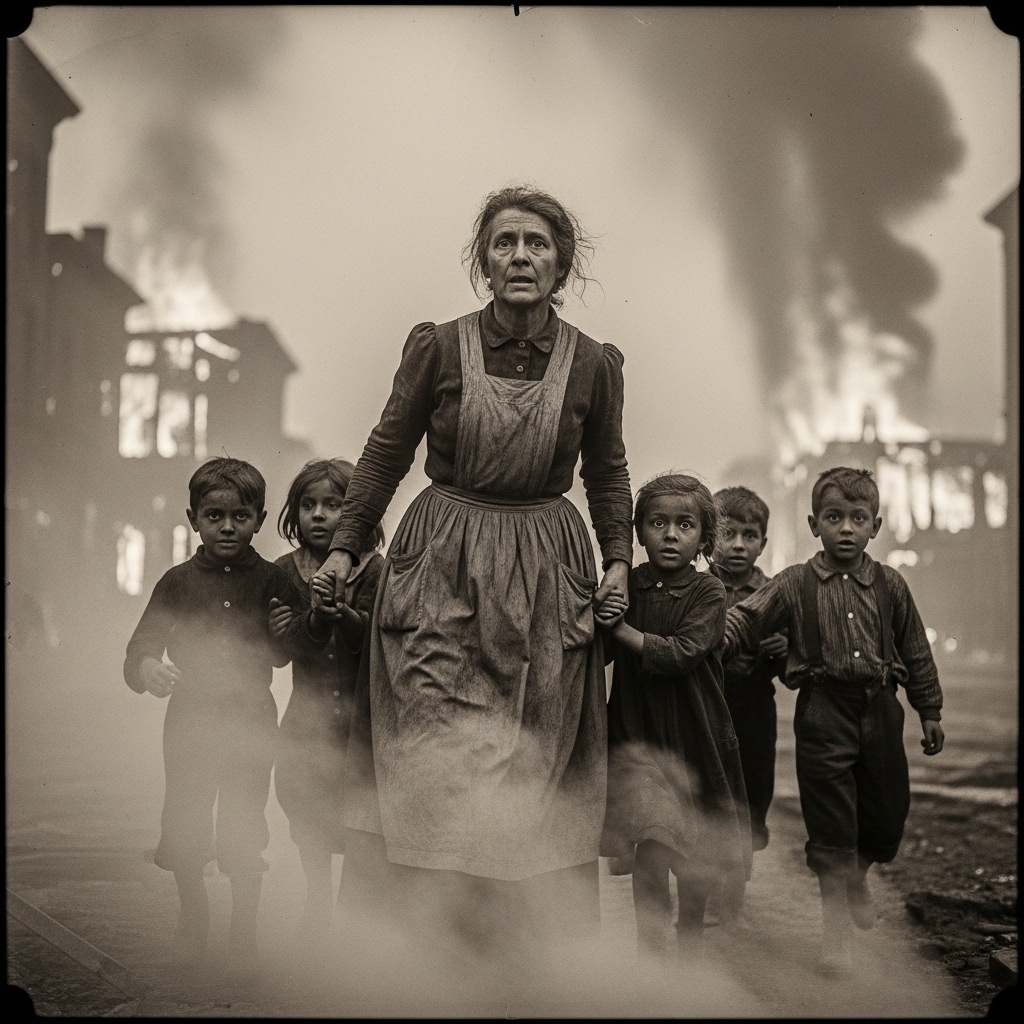
    In 1871, when the Great Chicago Fire swept through the city, flames devoured homes, businesses, and entire neighborhoods in a matter of hours. Among the chaos was a young teacher named Eleanor Harris, a woman whose courage would forever be etched not in the grand pages of history, but in the fragile memories of the children whose lives she saved.

    The fire began like a rumor—small, almost unremarkable. But by the time dusk fell, the sky itself seemed to be burning. Whole blocks of wooden homes collapsed into embers, and the heat was so fierce it melted iron. Families fled with nothing but the clothes on their backs. Some carried Bibles, others photographs, each person trying to cling to fragments of a life already gone. The newspapers later described it as an “unimaginable tragedy,” but for those who lived it, words would never capture the sound of horses screaming in the flames, the acrid smoke that clawed at lungs, or the sight of neighbors vanishing into the inferno.

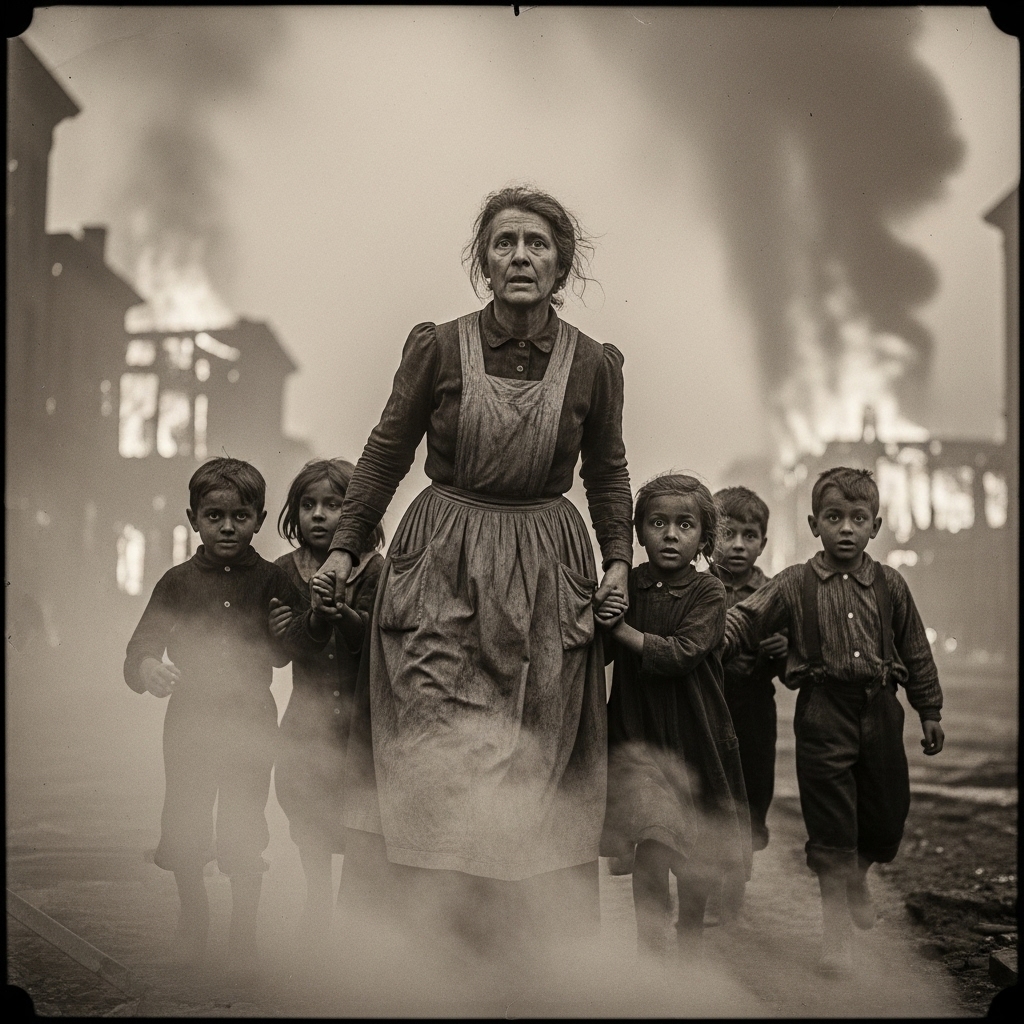
    Eleanor Harris, a modest schoolteacher, had no illusions of greatness. She was twenty-seven, unmarried, and had dedicated her life to teaching children whose parents worked long hours in factories and stockyards. Her schoolhouse was small, no more than a wooden frame tucked between rows of workers’ homes. That night, when the fire raged, she had the chance to run—many urged her to. But Eleanor refused. Twenty children clung to her skirts, their eyes wide with terror, and she understood with unshakable certainty that if she fled alone, their lives would be swallowed whole.

    As the firestorm pressed closer, Eleanor gathered the children inside the one-room schoolhouse. The smoke seeped through the windows, choking and black, and the timbers trembled from the heat. She could not let panic devour them. So she began to sing. Her voice, trembling at first, rose in strength as she sang hymns the children knew by heart. One by one, they joined in, their small voices piercing the roar of fire. The singing steadied them, even as sparks danced across the roof.

    When the walls began to glow red, Eleanor knew it was time to move. Taking the smallest child into her arms, she ordered the others to hold hands, forming a fragile chain of trust in the midst of chaos. They stepped into the street where flames leapt from house to house, consuming the world they knew.

    The path to the river was blocked by fire and falling beams. Eleanor led them through alleys thick with smoke, coughing but determined, her heart pounding with each collapsing wall. She carried one child until her arms shook, then set him down only to scoop up another. “Keep moving,” she urged, though her own legs felt carved from stone.

    At one point, when they reached a bridge, they found it impassable—the flames had already swallowed it whole. Despair threatened to crush her. But in that moment, Eleanor remembered the stories of her grandmother, who had fled famine in Ireland, who had walked miles barefoot across a foreign land with nothing but faith. That memory gave Eleanor strength. She turned away from the bridge and led the children further upstream, until they found a shallow crossing. Together, wet and trembling, they waded through the river, the current dragging at their small bodies, but Eleanor’s voice never faltered.

    Hours later, as dawn broke and the fire began to die, Eleanor emerged on the far side with every single child still alive. The city they knew was gone—block after block reduced to ash. But in the eyes of those children, hope remained, fragile and burning just as fiercely as the fire that had nearly destroyed them.

    Years later, many of Eleanor’s students went on to become teachers, ministers, and workers who helped rebuild Chicago. Some spoke of her in hushed tones, calling her their angel, their savior. One boy, who had been carried across the river on her back, later wrote that whenever he faced despair in his life, he remembered the sound of her voice singing against the flames.

    Yet Eleanor Harris’s name is barely mentioned in history books. She lived the rest of her life quietly, never seeking recognition. To the world, she was only another teacher. But to those children, she was the embodiment of human resilience, survival against all odds, and the untold heroism born in the darkest nights.

    Her story reminds us of the countless unnamed women and men throughout history—during wars, the Holocaust, and other human tragedies—who have stood against overwhelming forces, not with weapons, but with courage, compassion, and the refusal to abandon hope. In a century scarred by suffering, these quiet figures illuminate what it means to be human.

    The Great Chicago Fire was not the Holocaust, nor the brutality of concentration camps, yet the echoes of suffering and survival bind them. Every tragedy births its unsung heroes. Whether in the ghettos of Warsaw, the ruins of bombed cities, or the inferno of Chicago, ordinary people have carried others through unimaginable darkness. And just as we remember the famous names of history, we must not forget those who saved lives quietly, without medals or monuments.

    In an age where we search for meaning in survival stories, Eleanor’s courage still speaks. It teaches us that true heroism is not measured by glory, but by the lives touched in fleeting, desperate moments. She reminds us that even in the face of devastation, hope can endure.

    Note: Some content was generated using AI tools (ChatGPT) and edited by the author for creativity and suitability for historical illustration purposes.

  • The Broken Spoon – Mauthausen, 1945 .US

    The Broken Spoon – Mauthausen, 1945 .US

    The Broken Spoon – Mauthausen, 1945

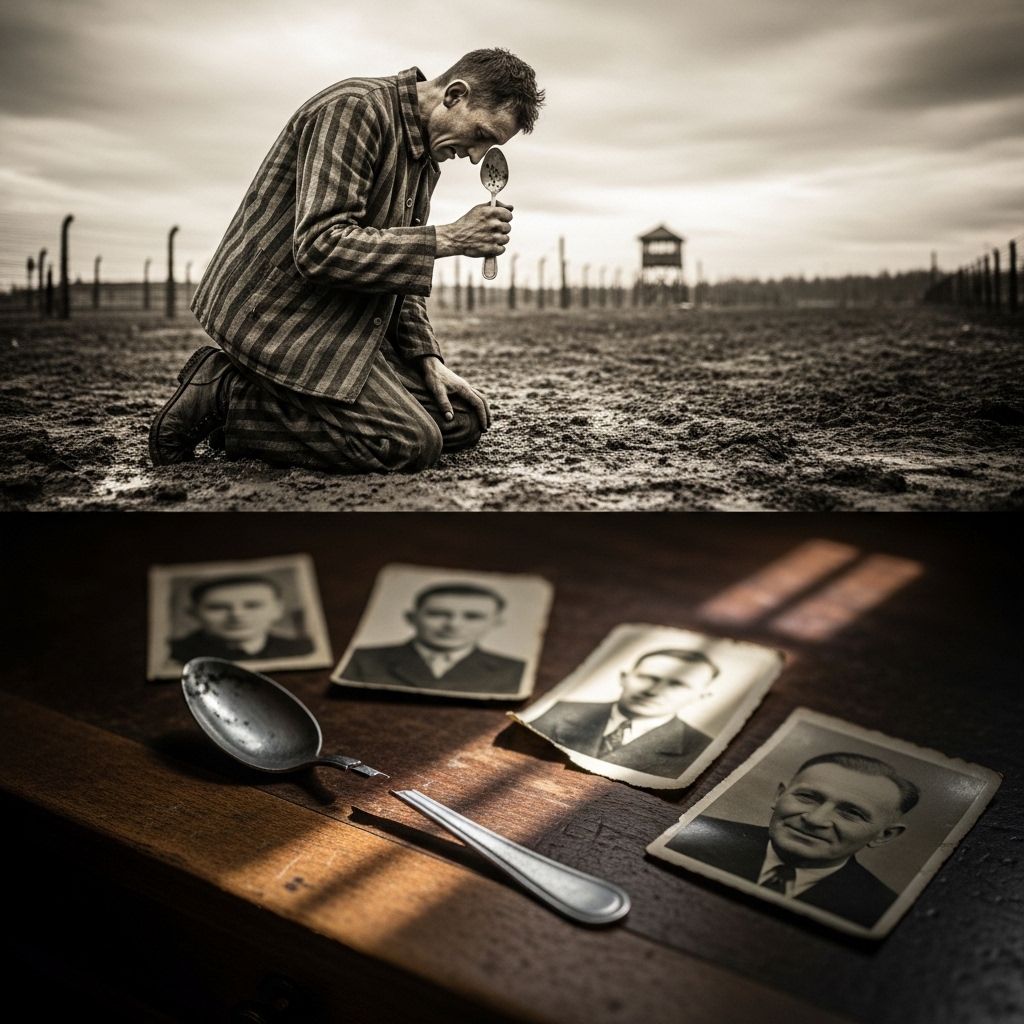
    In the mud and filth of Mauthausen, where the air itself seemed poisoned with despair, a prisoner knelt on the frozen ground. His striped uniform clung to his body like a shroud, and his eyes, hollow from hunger and grief, fixed upon something that glimmered faintly in the dirt. It was not gold, nor bread, nor any treasure the world might covet—it was half a spoon, bent and battered, abandoned like the countless lives extinguished around him.

    To anyone else, it would have been nothing. But to him, in that place of calculated starvation, it was everything. He lifted it with trembling hands, pressing the cold metal to his lips as if it were a relic. That broken spoon became his companion, his lifeline, his quiet rebellion. With it, he ate not like an animal forced to gulp from the trough, but like a man reclaiming the smallest fragment of dignity. Every scrape of soup, every crumb of bread balanced on its edge, became a ceremony of survival.

    The camp was designed to erase identity, to grind men into dust beneath the boots of their oppressors. Names were replaced by numbers, families severed, voices silenced. Yet in the simple act of using that spoon, he asserted: I am still here. I still belong to life. It was no longer just metal—it was defiance, a shield against the machinery of annihilation.

    There were nights when the hunger was unbearable, when death whispered through the barbed wire. He clutched the spoon as if it were a talisman, feeling the rough edges cut into his skin. He imagined the meals of his childhood, his mother’s table, his father’s stories, the laughter of brothers long vanished. The spoon carried memory, and memory carried hope.

    When liberation finally broke the gates in 1945, he staggered out not as a conqueror but as a shadow of a man. Yet in his pocket, hidden against his ribs, the spoon remained. It traveled with him back to a world that had been shattered beyond recognition. He had no house, no country, no family to return to—only this fragment of bent steel. But it was proof. Proof that he had endured. Proof that they had not taken everything.

    Years later, in the quiet of his study, the spoon rested on his desk. Around it lay photographs of faces gone forever—friends, brothers, fellow prisoners who had never seen the gates open. He would sit before it in silence, sometimes weeping, sometimes whispering words no one else could hear. To the world, it was just a broken spoon. To him, it was his medal, his testimony, his declaration: I lived.

    Unlike monuments of stone or declarations etched into history books, the spoon spoke in whispers. It told a story of resilience, of a man who clung to life not with weapons or banners but with the simplest tool of survival. It was not a relic of victory, but of persistence—the will to exist when existence itself was forbidden.

    And in that quiet persistence lies the essence of humanity. The broken spoon of Mauthausen is not just one man’s story; it is the story of us all—the reminder that even in the face of cruelty, the smallest act of holding on can be a triumph.

    Note: Some content was generated using AI tools (ChatGPT) and edited by the author for creativity and suitability for historical illustration purposes.
  • The Bread of Silence — Warsaw Ghetto, Poland, 1943 .US

    The Bread of Silence — Warsaw Ghetto, Poland, 1943 .US

    The Bread of Silence — Warsaw Ghetto, Poland, 1943

    The walls of the Warsaw Ghetto were not built of bricks alone. They were built of hunger, silence, and despair. Behind the barbed wire, thousands of lives shrank into shadows, their identities reduced to numbers, their humanity eroded day by day. Amid this suffocating darkness, one woman clutched not to hope—because hope seemed too fragile—but to love. It was the only thing she had left to give.

    Her name is lost to history. She was one of countless mothers forced to survive on starvation rations, scavenging scraps in a world that no longer recognized her dignity. Yet what made her extraordinary was not the suffering she endured, but the quiet choice she made each day in the heart of that prison: she saved a crust of bread for her son.

    Every morning, as the sun rose pale over the ghetto’s ruined streets, she would take her portion and break it in half. The smaller piece she ate, or sometimes nothing at all, while the larger she pressed into the hands of her boy. He was too young to understand the enormity of her sacrifice. All he knew was that bread filled his stomach and her smile warmed his heart. But he asked her once, when her hands trembled from weakness:

    “Why don’t you eat, Mama?”

    She looked at him with eyes that carried both sorrow and light. “Mothers eat when their children are full,” she whispered.

    The Nazis had designed the Warsaw Ghetto as a slow death camp. Rations were calculated so that adults would wither, their strength consumed by malnutrition. The average daily intake was less than 300 calories—barely enough to keep a child alive, let alone an adult. Hunger was not an accident; it was policy, a weapon as sharp as any bayonet.

    Yet even in this engineered famine, mothers carved miracles from nothing. They bartered scraps, scavenged potato peels, risked their lives to smuggle food through cracks in the wall. And some, like her, chose to give everything they had to their children.

    Her body grew thinner. Her cheekbones jutted out, her arms lost their strength. But the boy grew, little by little, nourished by her sacrifice. In the ghetto, survival was a lottery, but she tilted the odds ever so slightly toward him by surrendering her own chance.

    She never told him she was starving. She never spoke of the gnawing pain that hollowed her stomach at night. Instead, she filled the silence with stories. She told him of summer fields outside the city, of bread baked fresh in the oven, its crust golden and warm. She spoke of freedom as if it still existed somewhere beyond the walls.

    In that silence, she gave him more than food. She gave him a reason to live.

    Many mothers perished in the ghetto, their bodies abandoned in alleys, their names forgotten in the endless tide of death. But this woman endured just long enough. Long enough for her son to survive the great deportations, long enough for him to be smuggled to safety, hidden by strangers who risked their own lives.

    She did not live to see the war end. When liberation finally came, her boy was alive, but she was gone—one more star extinguished in the Holocaust.

    Decades later, in a quiet kitchen far from Poland, that boy—now a man with children of his own—sat at the table with a piece of bread in his hands. He told his children:

    “Every time I eat bread, I taste her sacrifice. I taste the hunger she carried so I could live. I taste the silence she endured so I could grow into this life.”

    In a small wooden box, wrapped in cloth, he kept a single hardened crust. It was not much to look at—just a scrap, yellowed and brittle with age. But to him, it was a relic holier than any crown or jewel. It was proof that love had once conquered hunger, that a mother’s heart had defied the machinery of death.

    The story of one mother in the Warsaw Ghetto is not just her own. It is the story of countless women in the Holocaust who gave their children a chance at life while surrendering their own. It is the story of human resilience, of how even in the shadow of Auschwitz, Treblinka, and the ghettos, love endured.

    Today, when historians speak of the Holocaust, they cite numbers: six million Jews murdered, tens of thousands starved in ghettos, entire communities erased. But the truth is found not only in the scale of loss, but in the intimate details—the crust of bread, the whispered words, the smile through hunger.

    Her sacrifice transforms statistics into something unforgettably human.

    When visitors walk through Holocaust museums, they see shoes piled in mountains, photographs of emaciated children, fragments of lives stolen. But if they listen closely, beyond the silence of history, they can almost hear a mother’s voice whispering:

    “Mothers eat when their children are full.”

    That sentence is not just a memory. It is a commandment—an eternal reminder of what love can endure, and what humanity must never forget.

    Her son carried her sacrifice like a flame. Every generation after him was touched by that flame, lit by the bread of silence. His children grew up knowing that their existence was built on an act of love so profound that it defied starvation itself. His grandchildren, when they visited Poland, stood at the remnants of the ghetto wall and placed a piece of bread at its base.

    For them, it was not just bread. It was history. It was faith. It was her.

    “The Bread of Silence” is not a story about despair—it is a story about resilience. It reminds us that in the darkest corners of history, when oppression and genocide sought to extinguish life, love became a weapon of survival. The Warsaw Ghetto was meant to erase a people, but within its walls, a mother carved eternity from a crust of bread.

    And so, every time bread is broken, every time children are fed, we are called to remember her silent sacrifice.

    Because love, once given, never dies.

    Note: Some content was generated using AI tools (ChatGPT) and edited by the author for creativity and suitability for historical illustration purposes.
  • The Medal on His Chest — Okinawa, Japan, 1945 .US

    The Medal on His Chest — Okinawa, Japan, 1945 .US

    The Medal on His Chest — Okinawa, Japan, 1945

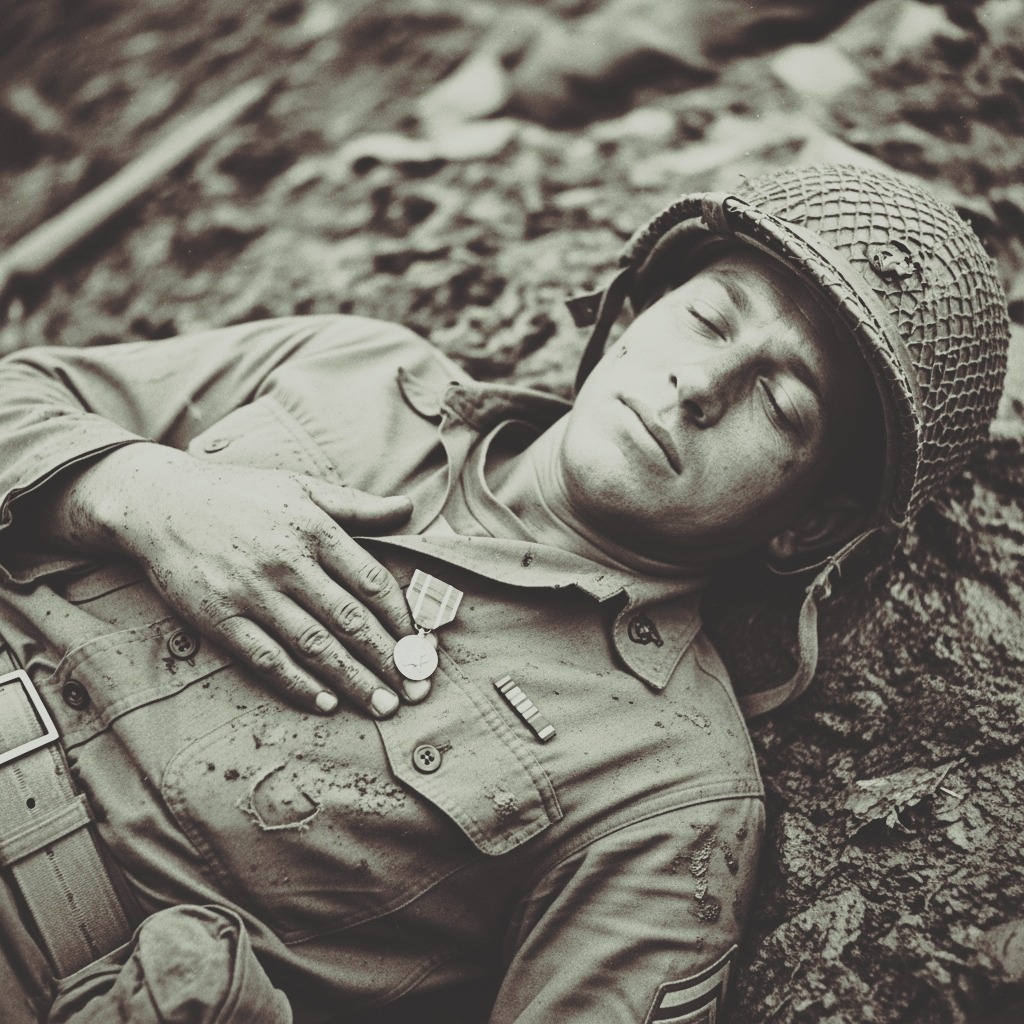
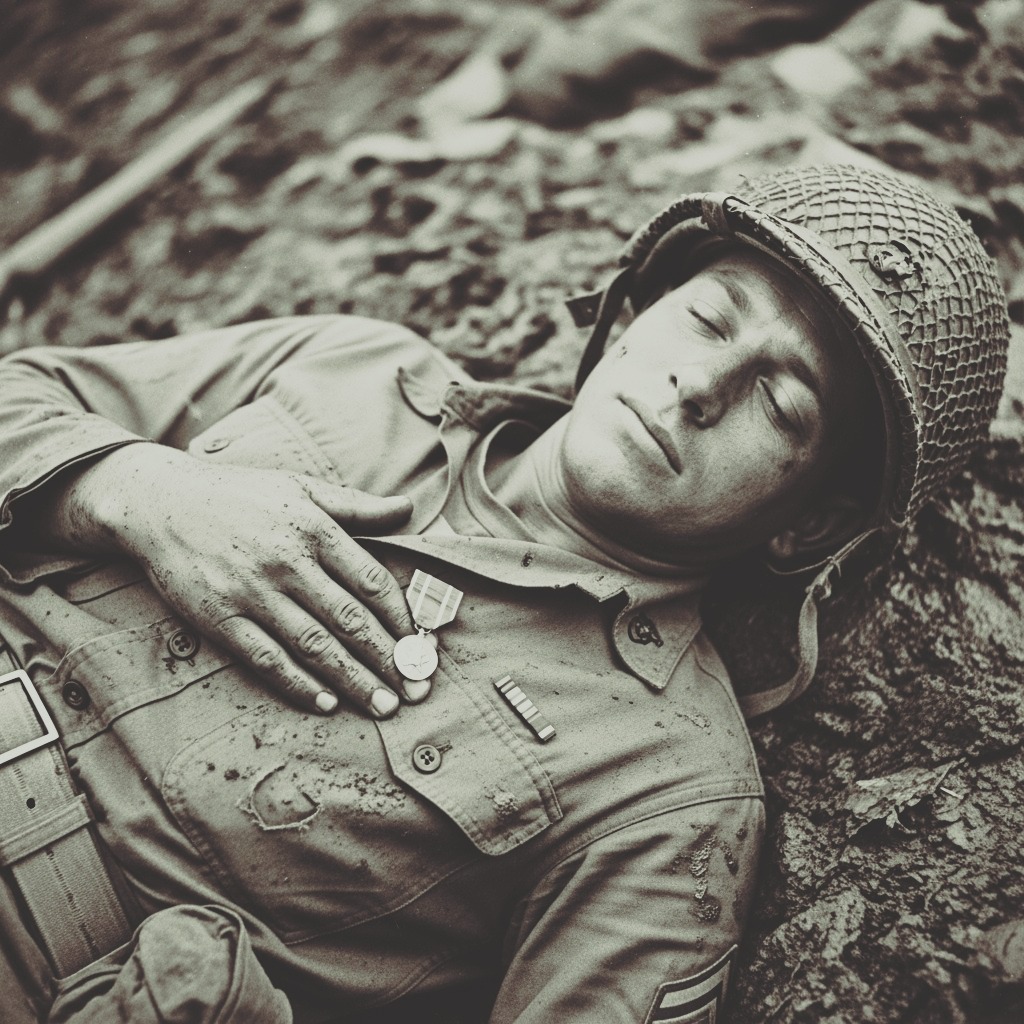
    The island smelled of death long before the soldiers landed. Okinawa was not merely a battlefield; it was a graveyard in waiting. Rain mingled with gunpowder, blood soaked into the coral earth, and the cries of the wounded carried through the jungle like haunting prayers. Among the thousands of U.S. Marines who marched toward that inferno was Private First Class Daniel Carter, a farm boy from Kansas who had grown up chasing fireflies in fields that now seemed like another lifetime. On his chest, pinned carefully beside the standard-issue decorations of his unit, was a single medal that did not belong to him. It was the medal of his brother, Matthew, who had been killed at Peleliu the year before.

    Daniel carried it not as a keepsake, but as a living covenant. Before every assault, he would clutch it in his calloused hand, whispering into the smoke and chaos: “You go with me.”

    Matthew Carter had been the first to enlist. In 1942, when the war reached across oceans and demanded America’s sons, he answered the call without hesitation. Strong, broad-shouldered, and fearless, he became the pride of the family. Daniel, younger and quieter, had always followed in his shadow. When the telegram came announcing Matthew’s death, the Carter household was split open by grief. Their mother folded inward, her hands clutching the last letter he had written, while their father stared at the fields, unable to plow, as though the soil itself had betrayed him.

    Daniel enlisted the very next week. He told no one it was because of Matthew. But in the silence of the night, before he shipped out, he stood at his brother’s grave and swore aloud: “I’ll finish what you started.”

    The military medal Matthew had earned for bravery was slipped into Daniel’s pocket by their mother. She did not speak, only pressed it into his hand, eyes hollow yet shining. It was as if she knew that medal was more than metal — it was the embodiment of a promise, a lifeline between her two sons.

    By April 1945, the Pacific had already consumed countless lives, but Okinawa was different. It was the last step before the mainland of Japan, and both sides knew its outcome would shape history. Soldiers called it the “Typhoon of Steel,” and Daniel walked straight into its teeth.

    Every day was a blur of fire. Mortar shells ripped apart foxholes, machine gun nests spat death without mercy, and rain turned the battlefield into a swamp of mud and blood. Marines joked darkly about the afterlife, but their eyes betrayed exhaustion too deep for words.

    And yet, in those hours before charging a ridge or storming a cave, Daniel always reached for the medal. He would press it against his chest and whisper to the brother who wasn’t there, “You go with me.” Some men carried photographs of wives or sweethearts; Daniel carried the bond of blood, heavier than steel, brighter than any star that could pierce the Okinawan night.

    On May 18th, his unit was ordered to take a ridge fortified by enemy bunkers. The rain had turned the hillside into a slick chute of death. Bullets hissed through the air, grenades tore the earth into fragments, and men fell faster than medics could reach them. Daniel advanced anyway, every step fueled by memory.

    Halfway up, shrapnel tore into his side. He staggered, fell, and for a moment the world tilted — the cries of the wounded drowned in the roar of his own heartbeat. Crawling to a shallow depression in the earth, he pressed the medal into his chest. His lips formed words he had repeated a thousand times: “You go with me.”

    When the medics found him, Daniel was lying still, his face strangely peaceful despite the carnage. His hand remained clenched tightly around the medal, as though even death could not pry it loose. He was twenty-two years old.

    Weeks later, back in Kansas, the Carter family received a letter written in Daniel’s hand but delivered after his death. In it, he had written:

    “If you are reading this, I am with Matthew now. Tell Mom he never left my side. Every step I took, he walked with me. Every fear I had, he carried. And when it was time to lay down, he was there to guide me home.”

    U.S. Marines and Sailors are awarded with Navy and Marine Corps Achievement Medals and Letters of Appreciation at Camp Schwab, Okinawa, Japan, Oct. 11, 2024. The Marines and Sailors were awarded for their heroic actions in providing aid to a Japanese local after a vehicle accident in Okinawa, Japan. The Marines are with 4th Marine Regiment, 3d Marine Division. (U.S. Marine Corps photo by Cpl. Michael Taggart)

    The family wept. His mother held the medal — now returned once more — and for the first time since the war began, she smiled through her tears. Two sons gone, but not lost; their bond had carried them through oceans, battles, and the grave itself.

    Today, when we speak of World War II, of Okinawa, or of the millions who perished in the Holocaust and across the battlefields of Europe and the Pacific, it is easy to be overwhelmed by the statistics. Numbers blur into abstractions. But behind each number was a life, a promise, a story like Daniel and Matthew’s — brothers whose love became a shield, whose courage transcended the brutality of history.

    The medal that once lay on Daniel’s chest is now displayed in a glass case in a small Kansas museum. Tourists walk by, pausing briefly, reading the inscription about the “Carter Brothers of World War II.” Few linger long enough to imagine the reality: the rain-soaked mud of Okinawa, the last whisper of a dying Marine, the mother pressing a medal into her son’s hand, praying it would bring him home.

    But for those who stop, for those who let the story unfold in their minds, the medal is no longer just metal. It is a testimony to sacrifice, to the cost of freedom, to the human heart’s unbreakable bond even in the face of the darkest war in history.

    In the silence of the museum, if you listen closely, you might almost hear it — the whisper Daniel repeated again and again on foreign soil:

    “You go with me.”

    And in that whisper lives not just the Carter brothers, but the memory of every soldier who fought and fell, every family that grieved, every name etched into the long, endless roll call of war. It is a whisper that reminds us of the fragility of peace, the price of liberty, and the eternal endurance of love.

    Note: Some content was generated using AI tools (ChatGPT) and edited by the author for creativity and suitability for historical illustration purposes.
  • Amid the Frozen Tracks — Des Moines, 1933 .US

    Amid the Frozen Tracks — Des Moines, 1933 .US

    Amid the Frozen Tracks — Des Moines, 1933

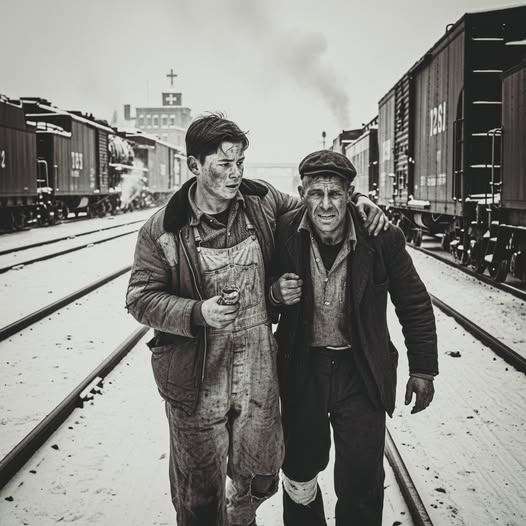
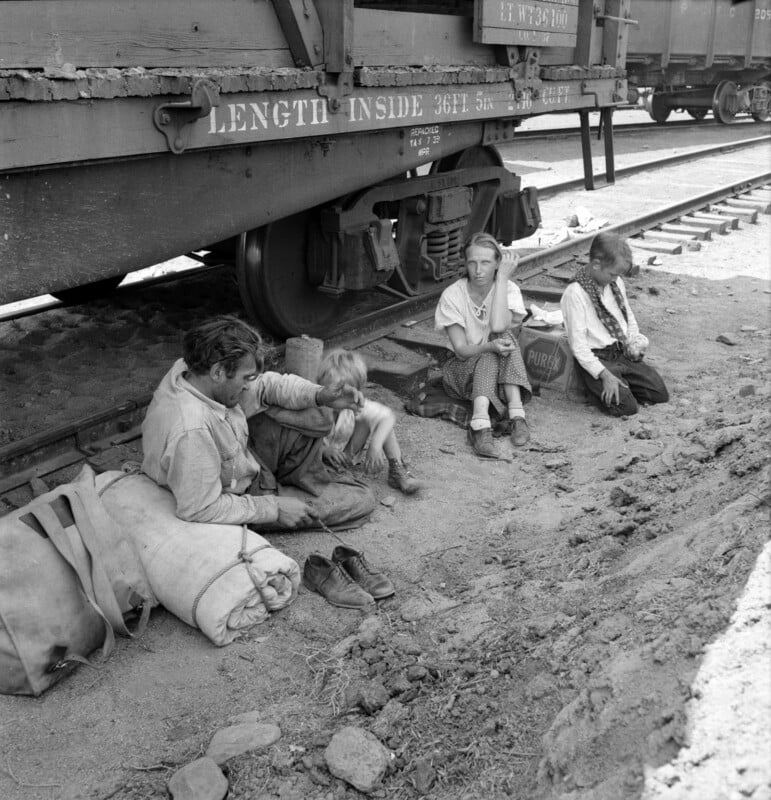
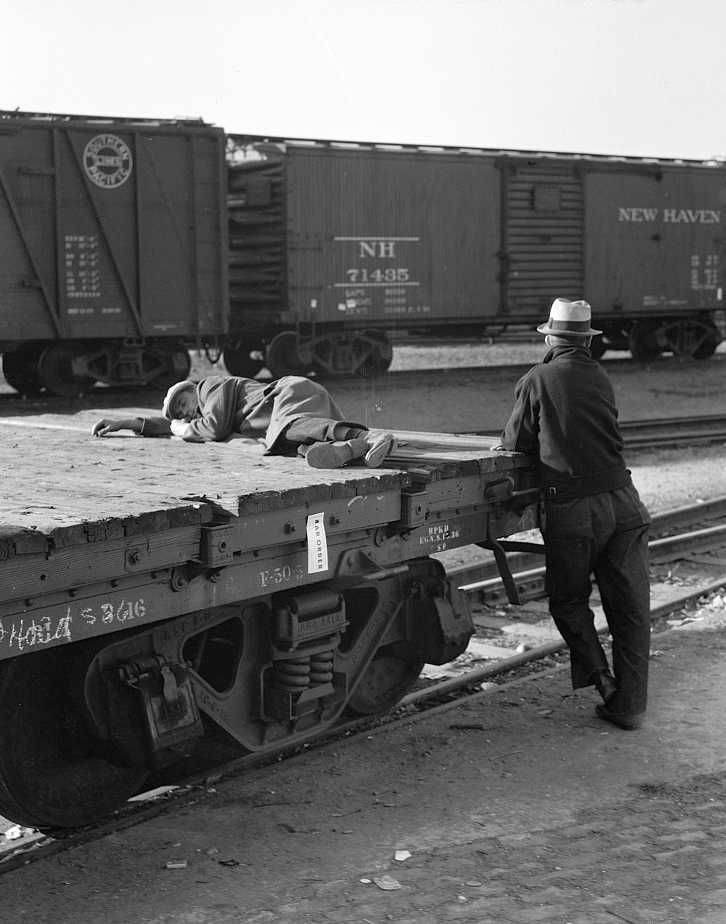
    The winter of 1933 was one of the coldest Iowa had known in years. The Great Depression had stripped towns bare of hope, leaving only frostbitten mornings, silent breadlines, and the long shadows of freight trains cutting across the snow. It was on one of those trains—steel beasts that carried the restless, the desperate, and the unwanted—that a teenage boy named Michael Cleary began his journey.

    Michael had started out from California, too young to be hardened yet too old to still believe that the world would hand him fairness. He was lean from hunger, his clothes frayed, the wind slicing through his coat as though it were gauze. To him, the boxcars were both coffin and cradle—carrying him toward unknown futures, yet always one slip away from death.

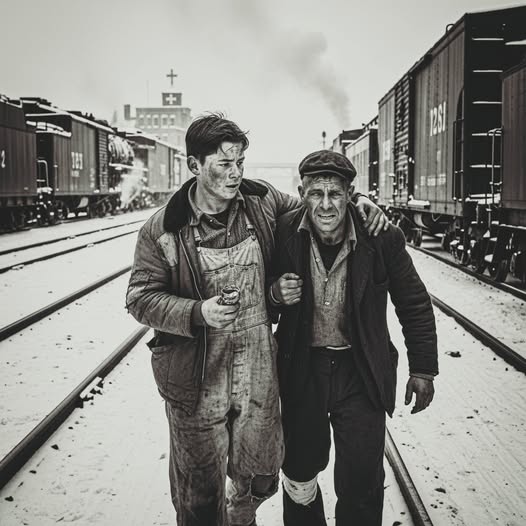
    On one bitter evening, outside the rail yards of Des Moines, Michael clung to the side of a freight train. The bulls—the railroad police—were merciless. If they caught him, he’d be beaten bloody or worse, left to freeze. He’d learned the art of leaping from moving trains when danger came close, the bruises of practice still mapped across his ribs. That night, he saw another hobo, older, exhausted, lose his grip on the ladder. The man’s legs disappeared under the grinding steel wheels in a sickening instant. Blood steamed against the snow, and Michael, his own heart splitting, dragged the man from the tracks. Against every cold wind, he hauled him—an almost lifeless stranger—toward the faint red cross glowing above a hospital building in the distance.

    The man lived, though his legs were gone. Michael never saw him again, but the memory seared into him: survival, he realized, was not only about his own hunger or safety. It was about refusing to let another soul vanish unseen into the cold machinery of history.

    In the days that followed, Michael lived the way so many Depression-era drifters did—by taking what scraps of work he could. He stacked wood for pennies. He unloaded coal for endless hours, the black dust embedding itself into his fingernails. He even cared for an elderly man for a single dollar a day, carrying firewood into his home and listening to stories of a world before the crash. Those jobs did not make him rich—they barely kept him alive—but they taught him something rarer than money: the worth of self-reliance, humility, and mercy.

    The Great Depression hollowed out America, but in those hollows, strange pockets of grace appeared. Sometimes it was a crust of bread shared among starving men beneath a bridge. Sometimes it was a stranger who offered you a blanket without asking your name. For Michael, it was the small mercies that mattered most—the kindness that could never erase the hardship, but could transform the meaning of survival.

    Years later, when his hair had silvered and his children sat at his feet, Michael Cleary told them of those winters on the tracks. He described the men with haunted eyes huddled around fires, the brutality of the bulls, the hunger that never fully went away. And he told them of the night he carried a broken man from beneath the train’s steel teeth to the door of mercy.

    “Those bloodied tracks and small mercies,” he whispered to his grandchildren, “showed me that survival isn’t just enduring—it’s lifting others when the world weighs you down.”

    In that moment, his story was no longer just his. It became a parable for generations, a reminder that even in the bleakest winters of history—whether in the Great Depression, the Holocaust, or the darkest wars—human dignity is measured not only by what we endure, but by how we refuse to let others fall.

    Michael’s legacy was not the scars of hardship, but the strength to carry another man when the world tried to crush them both. That is the story of America’s hobo jungles, of the wandering souls who kept kindness alive amid hunger, and of the boy who learned that the truest wealth is compassion.

    Note: Some content was generated using AI tools (ChatGPT) and edited by the author for creativity and suitability for historical illustration purposes.
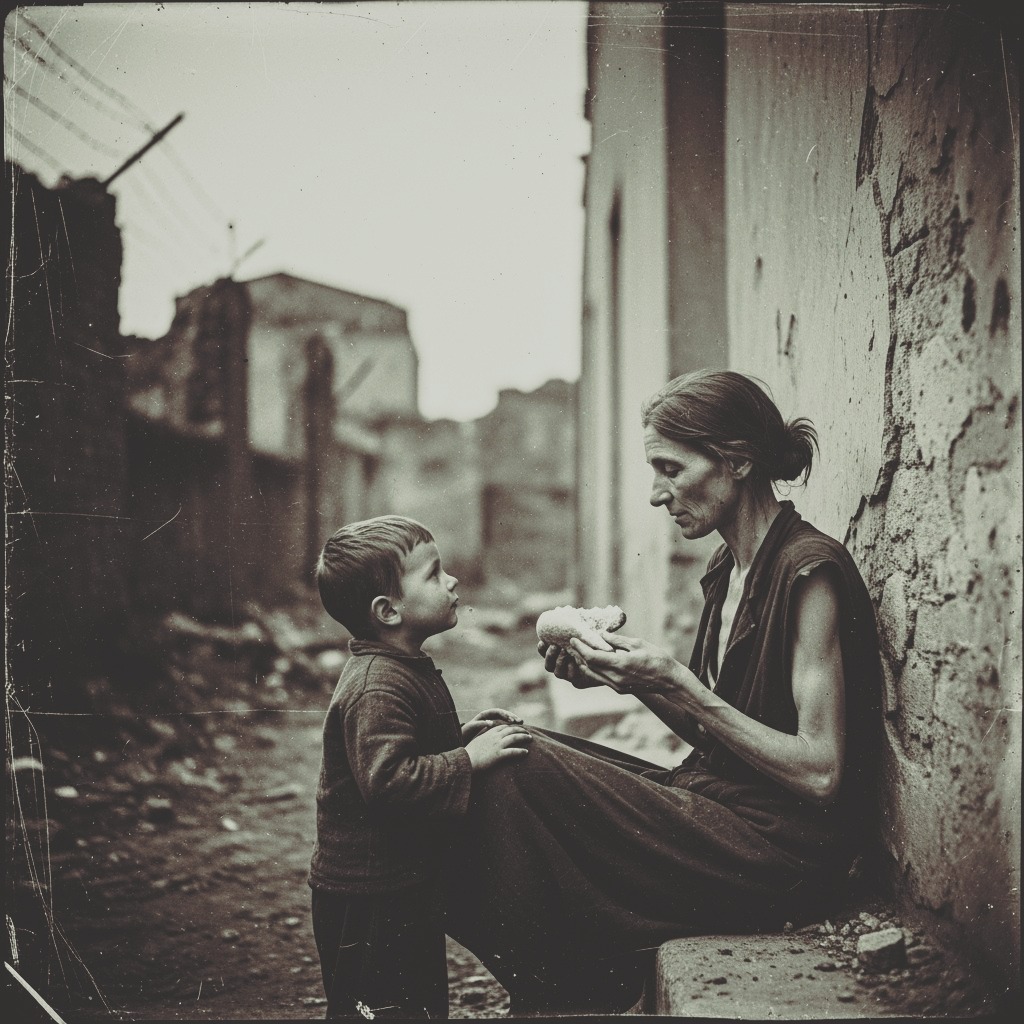
  • The Bread They Broke — Buchenwald, 1945 .US

    The Bread They Broke — Buchenwald, 1945 .US

    The Bread They Broke — Buchenwald, 1945

    There are moments in history when humanity seems to collapse entirely, where cruelty becomes law and compassion a crime. The Holocaust was such a time. Behind the barbed wire of Buchenwald, survival was measured not in days but in hours, in breaths, in crumbs of bread that became more valuable than gold. And yet, even in that world of hunger and death, there were sparks of defiance—not in violence, but in love, loyalty, and the quiet courage of sacrifice.

    This is the story of two men who refused to let the darkness strip them of their humanity.

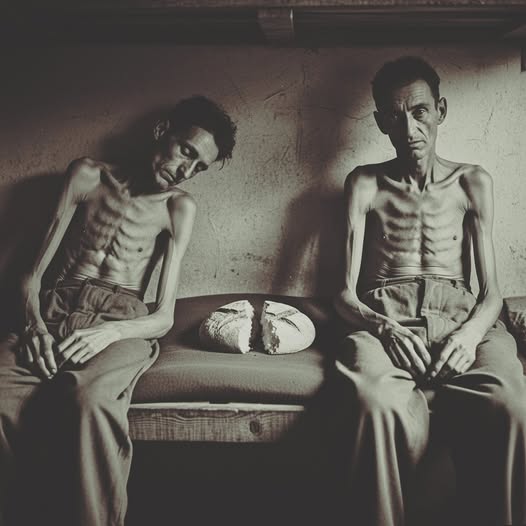
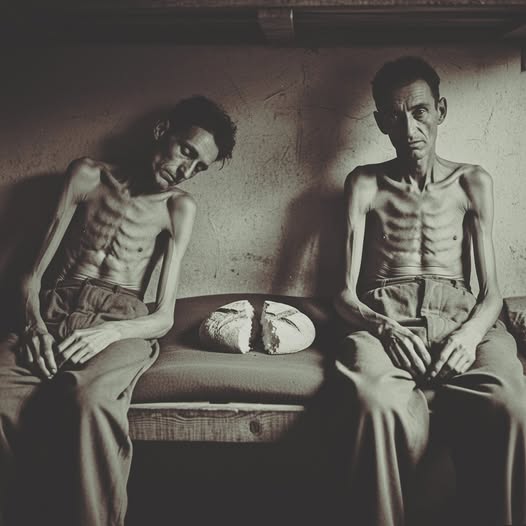
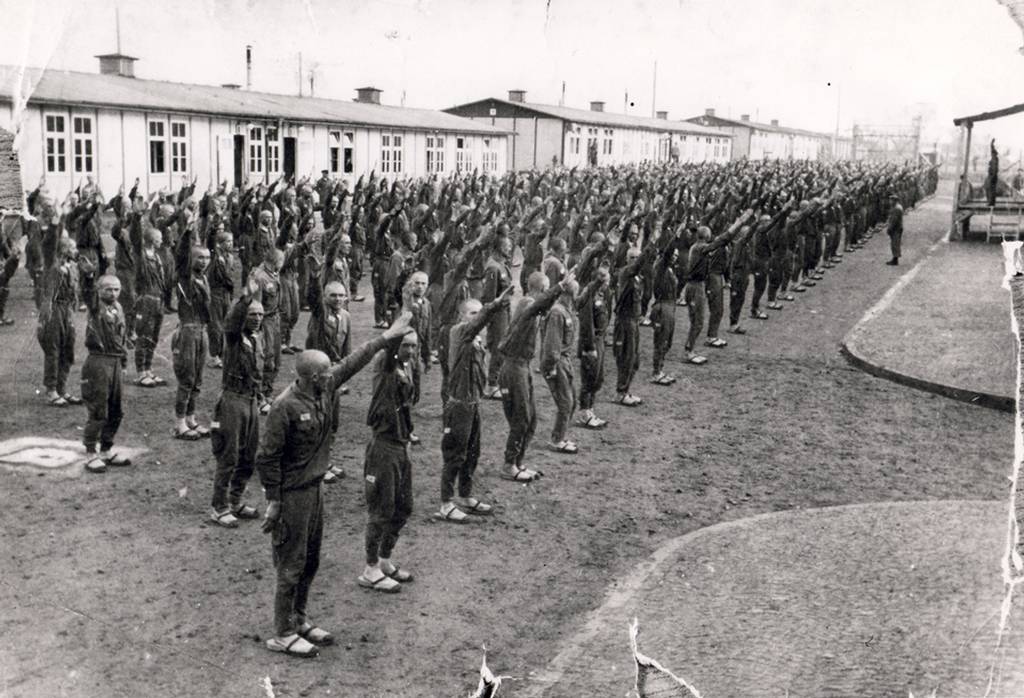
    The barracks of Buchenwald were silent except for the shallow rasp of breathing. Men sat slumped against wooden bunks, their eyes sunken hollows staring into nothing. The stench of disease hung heavy, mixed with the faint sourness of stale bread rations. Hunger was not just a physical torment—it was a slow unraveling of the spirit. Every day, prisoners watched their neighbors collapse, and every day, the guards reminded them that their lives were worth less than the crumbs in their hands.

    But in one corner, two men leaned against each other, their bodies skeletal, their skin stretched tight against bone. They were not brothers by blood, yet suffering had bound them together more tightly than kinship ever could. One was named David, the other Samuel—ordinary men before the war, reduced now to shadows of themselves. They shared everything, from whispered memories of home to the meager crusts of bread handed out by their captors.

    At first, sharing had been instinct, an echo of who they had once been. But as starvation deepened, as bellies shrank and bones protruded, the act of dividing bread became both unbearable and sacred. The thin slices were never enough. Each crumb counted. And yet David always broke his share in two, pressing half into Samuel’s palm.

    “Eat,” he would say.
    “Not without you,” Samuel would answer.

    It was madness. It was mercy. It was the last remnant of humanity in a place designed to erase it.

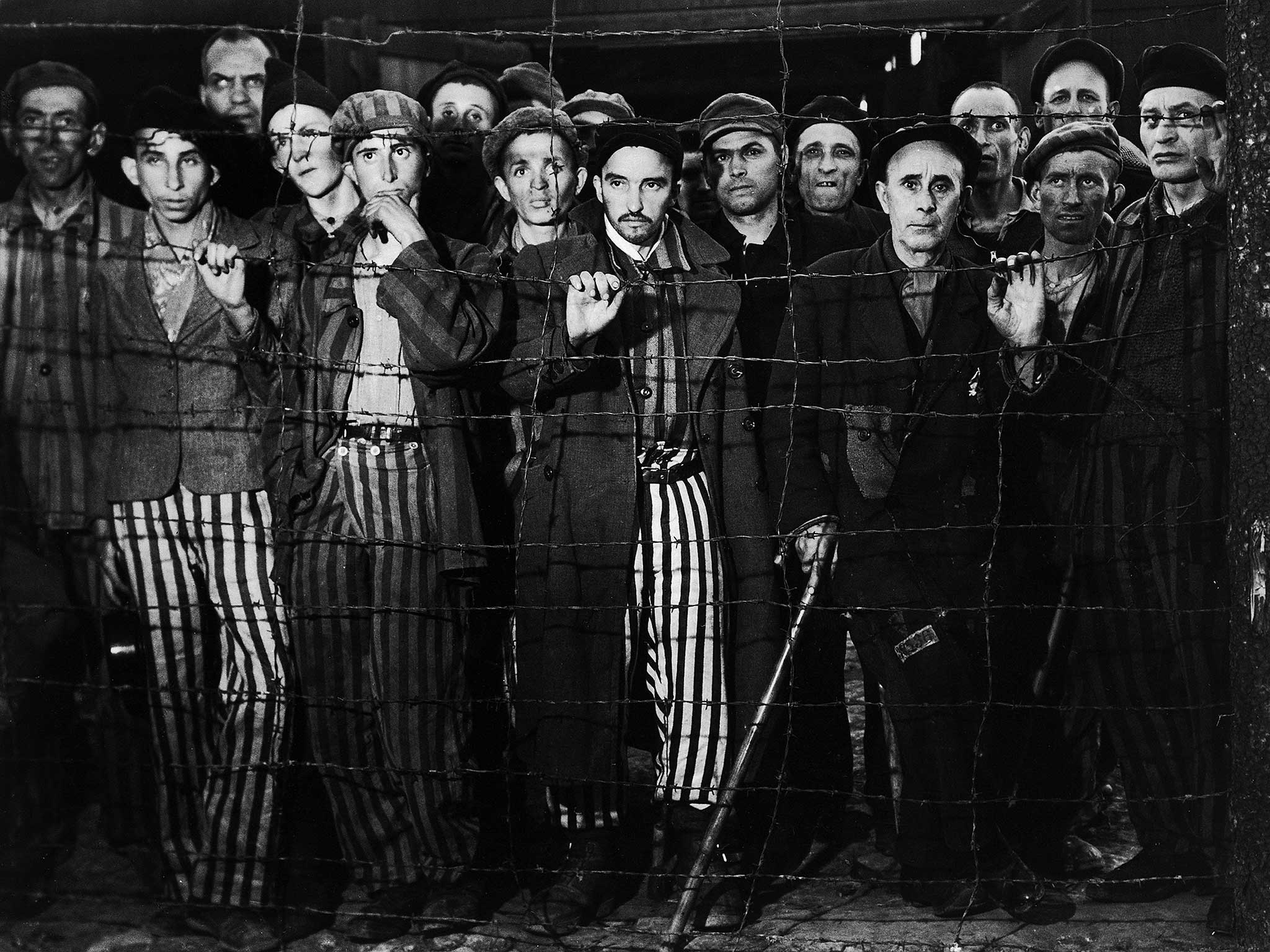
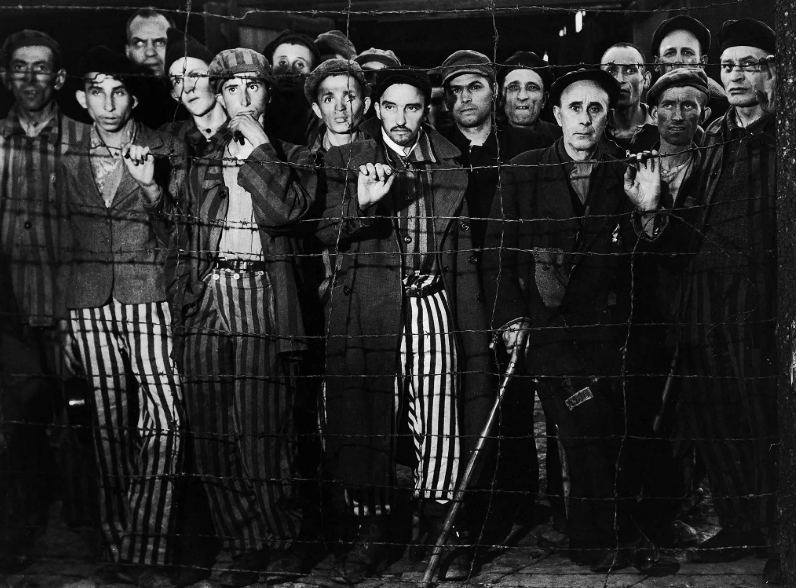
    Survivors gaze at photographer Margaret Bourke-White and rescuers from the United States Third Army during the liberation of Buchenwald, April 1945.

    The winter of 1945 was brutal. Snow drifted against the fences, but inside the barracks, the cold gnawed even deeper. Samuel grew weaker, his legs no longer able to hold him. His ribs jutted out like broken rafters beneath his skin, and his eyes—once bright with stories—had dulled into a gray that mirrored the ashen sky. David tried to lift him, to carry him when the guards demanded labor, but his own body was too frail.

    One night, the bread ration came late. The prisoners lined up in silence, clutching at the promise of survival. When David returned, he carried a single piece of bread, coarse and cracked, its weight both salvation and despair. He sat beside Samuel, staring at it for a long time. His own stomach burned with hunger so sharp it made him tremble. Yet when Samuel tried to turn away, whispering that he could no longer eat, David shook his head.

    “You will eat,” he said firmly. “We share this—always.”

    With trembling hands, he broke the bread in two. He placed one piece in Samuel’s lap, kept the smaller half for himself, and chewed slowly, though each bite felt like swallowing ash. Samuel’s eyes glistened with tears. He tried to push the bread back, but David closed his hand around it.

    “For me,” David whispered. “If you live, then a part of me lives too.”

    Days blurred into nights. Bombs echoed in the distance, rumors of the Allies advancing. Hope flickered like a fragile flame, but starvation was merciless. Samuel’s body gave way first. One morning, David woke to find his friend still beside him, his hand clenched around that final crust of bread, uneaten. His face was peaceful in a way it had not been in months.

    David wept silently. There were no tears left in him, only a hollow ache. Yet he took Samuel’s hand and held it, refusing to let go, even when the guards screamed at him to rise. The bread remained untouched—his friend’s last act of defiance, his last gift.

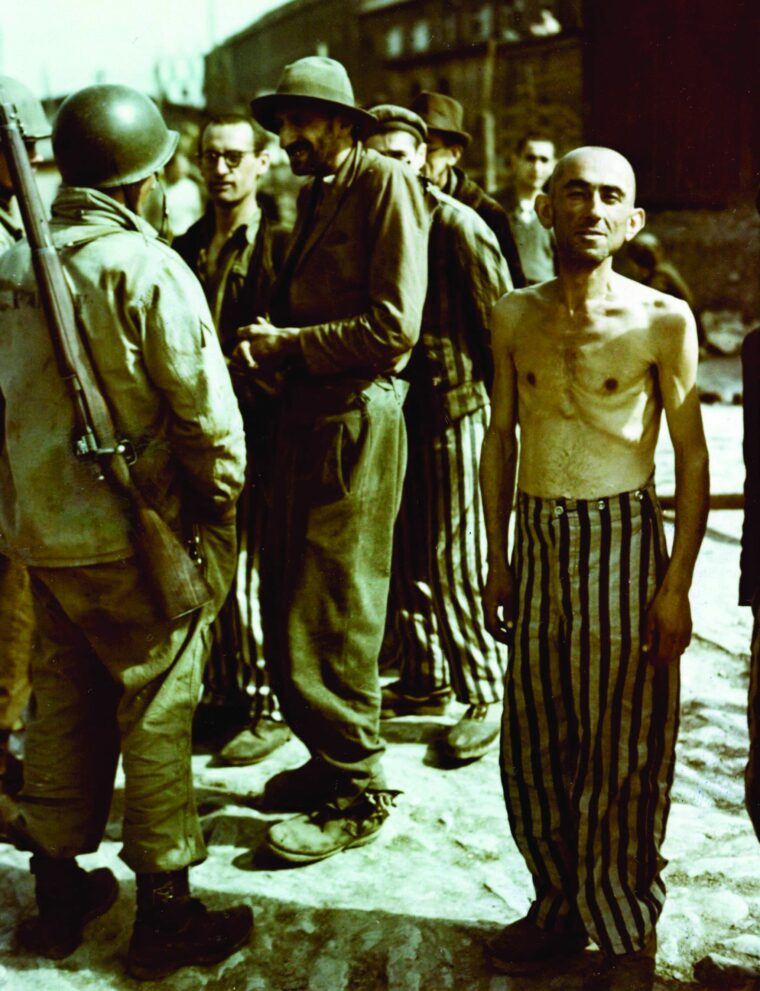
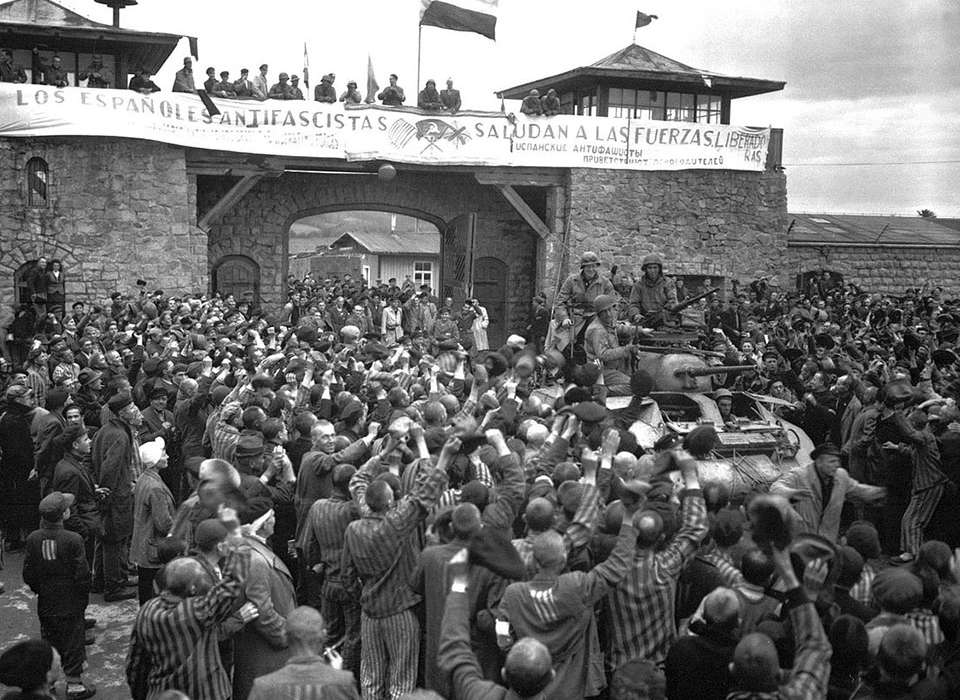
    When the gates of Buchenwald were finally forced open in April 1945, the liberators found David still alive, though barely. He weighed less than a child, his frame little more than bone and skin. But when asked how he had survived, he did not speak of strength, nor cunning, nor luck.

    “He gave me his last piece of bread,” David whispered. “It saved my soul, even if it could not save his life.”

    This story is not only about hunger. It is about the power of sacrifice, about how two men—stripped of everything, surrounded by death—still chose love over survival. In the Holocaust, where cruelty was engineered to break every human bond, their decision to share bread was an act of rebellion. It was proof that even in Buchenwald, humanity endured.

    The bread they broke became more than food. It was a symbol of hope, of friendship that could not be destroyed by hunger or fear. It was the light of compassion burning in the darkest of nights.

    Today, when visitors walk through the remains of Buchenwald, they see the empty barracks, the crumbling watchtowers, the silence of a place that once echoed with screams. But within those walls also linger stories like David and Samuel’s—stories that remind us that even in the face of the Holocaust’s brutality, humanity’s greatest weapon was not hatred, but love.

    And perhaps that is the lesson we must carry. That in times of war, oppression, and genocide, survival is not only measured by who lives, but by who remembers. By who loved, who gave, who refused to let evil erase their humanity.

    Seventy years later, the words still resonate:
    “He gave me his last piece of bread, and it saved my soul.”

    In a world that often feels fractured and cruel, we return to these moments, not to drown in sorrow, but to draw strength from them. For if two starving men in Buchenwald could still find the courage to share, then we, too, can choose compassion in our own lives.

    Note: Some content was generated using AI tools (ChatGPT) and edited by the author for creativity and suitability for historical illustration purposes.
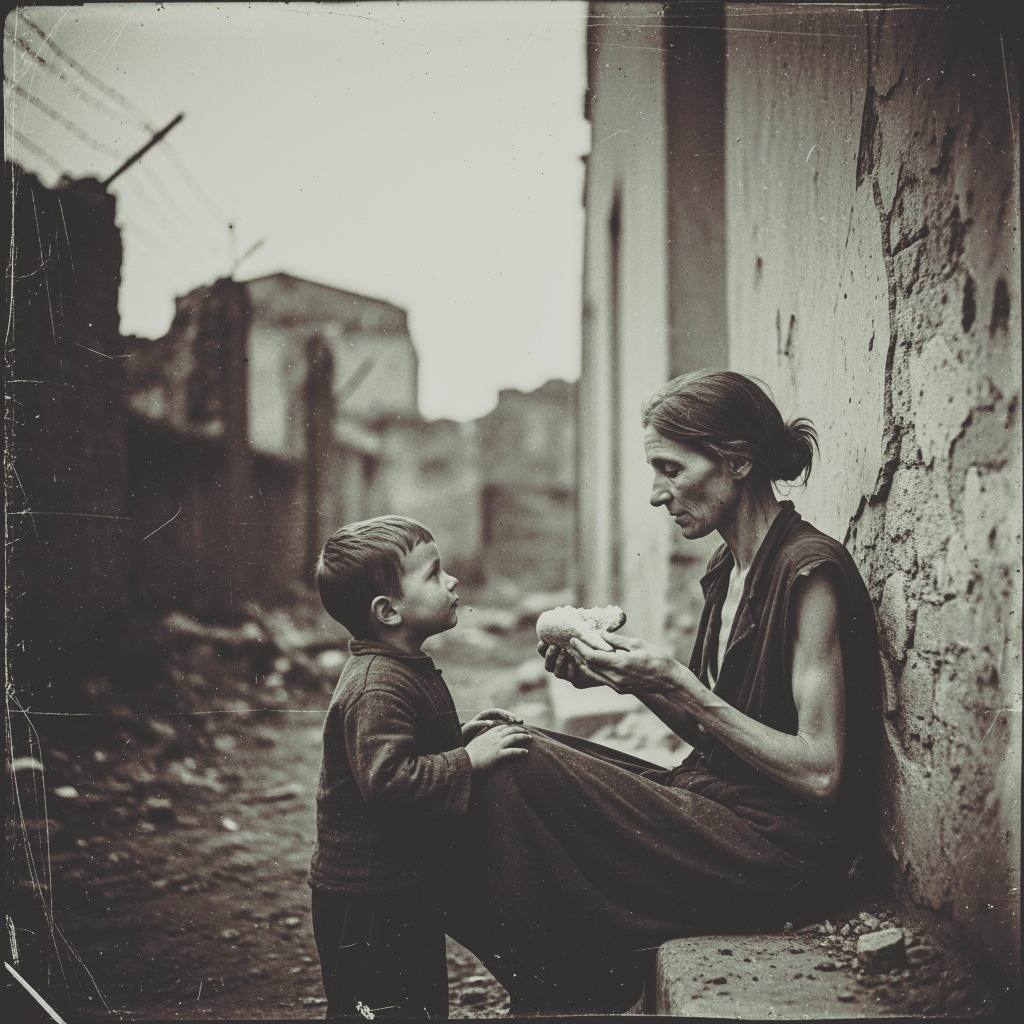
  • The Nurse’s Candle — Dachau, 1945 .US

    The Nurse’s Candle — Dachau, 1945 .US

    The Nurse’s Candle — Dachau, 1945

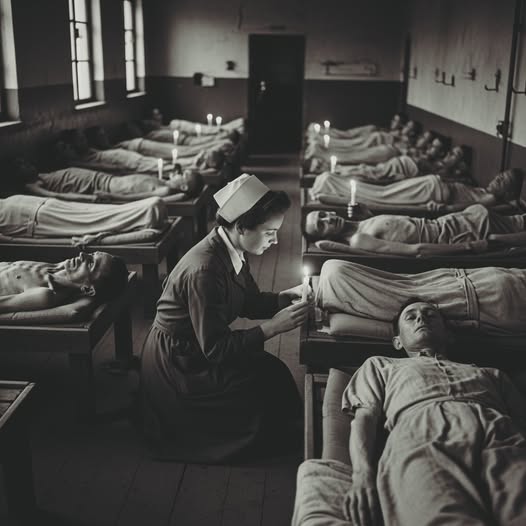
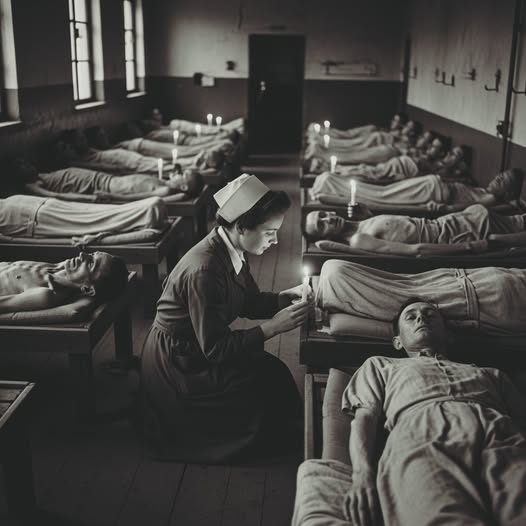
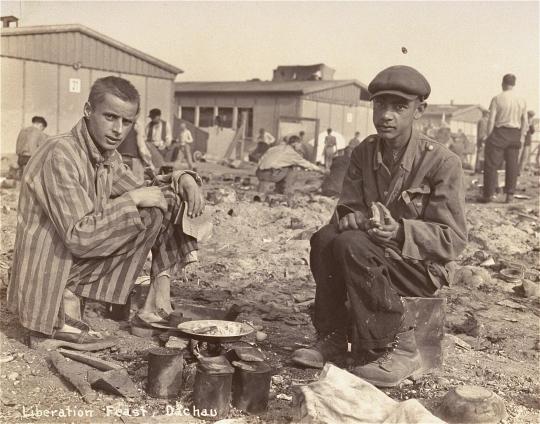
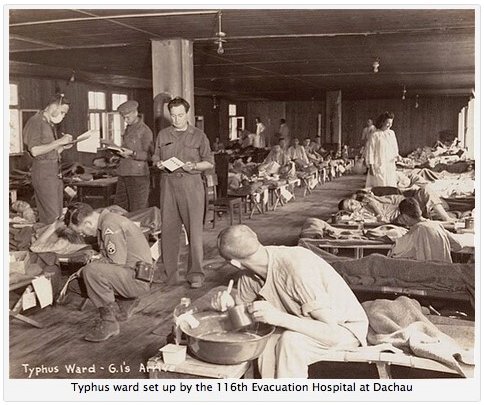
    The liberation of Dachau was not marked by trumpets or fanfare. It was not a parade of victory nor a celebration of conquest. It was silence broken by whispers, trembling breaths, and the faint rustle of skeletal men shifting in their bunks, their eyes adjusting to a light they no longer believed in. Among those emaciated figures—shadows of humanity suspended between life and death—stood an American nurse, her hands trembling not from fear but from the unbearable weight of compassion. In her palm, a single candle flickered.

    The barracks smelled of damp wood, sickness, and despair. Rows of hollowed men lay on wooden planks, their bodies wasted, their eyes pools of memories too cruel to be spoken aloud. The war had stripped them of everything—family, dignity, even the strength to rise. Yet when the flame touched the stale air of that room, a fragile hush settled, as though the men feared the candle might vanish like every other comfort stolen from them.

    One survivor, his lips cracked and voice barely more than a breath, whispered words that seemed to pierce through the nurse’s soul: “It is the first light I have seen that wasn’t fire.”

    Fire. For years, fire had meant crematoria, villages burning, transports vanishing into smoke. Fire had been destruction, not warmth. And now, this fragile flame—held steady by the nurse’s trembling hand—was more than light. It was defiance. It was testimony. It was a declaration that not all fires consume; some, astonishingly, can heal.

    The nurse remained through the night. She did not leave when the others left to rest, nor when the weight of exhaustion pressed down on her shoulders. She stayed, sitting on the rough boards beside each bed, lighting a small candle for every man who still had breath. She knew that her medicines were limited, that rations were scarce, and that she could not undo the years of torment etched into their frail bodies. But she understood something deeper: the human soul, fractured though it may be, still craves recognition.

    She sang lullabies from her childhood, words these men could not understand yet somehow recognized, because music had no borders, no language except comfort. She whispered promises not of heaven, not of miracles, but of presence: “You are not alone anymore.”

    Some wept silently, tears carving lines through the dirt on their faces. Others, too weak to cry, simply closed their eyes, letting her voice carry them away from the screams that had haunted their nights. For them, the nurse’s candle was not simply wax and flame—it was the first symbol of human kindness they had witnessed in years.

    The story of Dachau is written in numbers and shadows: thirty thousand prisoners liberated, thousands dead even in those final days, a legacy of horror. But history often forgets the moments that cannot be measured. History forgets the quiet acts of defiance, the way a single nurse chose to fight despair with tenderness.

    In that barrack, she was not a soldier. She was not armed with rifles or steel. She was armed with gentleness, and in the ruins of a world consumed by cruelty, that was enough to wage war against hopelessness. Her candlelight did not chase away all darkness—it never could—but it created pockets of warmth in which men remembered they were still alive.

    For decades, Holocaust survivor stories have centered on numbers, statistics, the scale of tragedy. Yet it is in these small gestures—the clasp of a hand, the flicker of a candle—that humanity reveals its greatest power. The liberation of Dachau was not only the defeat of tyranny; it was also the rediscovery of compassion in a place designed to erase it.

    Years later, one of the survivors, now an old man with grandchildren, recalled that night. “I had forgotten what it felt like to be touched with kindness,” he said. “That nurse’s candle—it was the first time I believed I could live again.”

    For him, survival was not only the absence of death, but the presence of care. That flame lit more than a barracks; it lit the fragile path back to life. And in that way, the nurse became part of their healing journey, not through medical charts or injections, but through an act so simple it seemed almost foolish—sitting beside the dying and declaring that they still mattered.

    The Holocaust was a machinery of dehumanization. It sought to strip men and women of identity, memory, even their names, reducing them to numbers tattooed on their flesh. Yet in Dachau, 1945, one nurse reminded them of what no oppressor could erase: their humanity. That reminder did not end the pain, nor did it undo the trauma. But it planted a seed of resilience, a fragile hope that even in the ashes of horror, compassion could survive.

    For those who walked out of Dachau alive, life was not a triumphant return but a stumbling rebirth. They carried wounds too deep for words, memories that scarred every attempt at joy. Yet in their testimonies, when they spoke of liberation, many did not speak first of soldiers or battles—they spoke of her candle. They spoke of that night when a stranger’s presence became the axis upon which despair turned, however slightly, toward hope.

    In today’s world, when the phrase Holocaust survivor stories is searched and retold, it often risks becoming abstract—a chapter in history books, a lecture in classrooms. But to imagine that room, to see the skeletal bodies lined in silence, to hear the voice whisper, “It is the first light I have seen that wasn’t fire,” is to step closer to the truth. Dachau was not simply a place of death. It was a place where the smallest act of compassion could stand as an act of rebellion against annihilation.

    The nurse did not know if the men would survive the night. Many did not. Yet she lit a candle for each of them anyway. Because sometimes hope is not about certainty—it is about presence. It is about saying, “You are not forgotten. You are not just a number. You are still human, and you are not alone.”

    The candle’s flame has long since burned out. The nurse herself, like the men she comforted, has passed into memory. Yet her story endures. In museums, in whispered recollections, in the legacy of Holocaust remembrance, her small act stands alongside monuments and memorials. Because it teaches us something monuments cannot: that history is not only about what was destroyed, but also about what survived.

    And what survived in that barrack, on that night in 1945, was not only the lives of a few men—it was the idea that compassion, however fragile, can endure even in the face of absolute darkness.

    Today, when we light candles in remembrance of the Holocaust, we are not merely mourning the millions lost. We are also carrying forward the flame of that nurse’s candle in Dachau. We are remembering that in humanity’s darkest hour, a single act of compassion could pierce the night.

    In a world still scarred by conflict, oppression, and indifference, the story of the nurse’s candle is more than history—it is a warning, and a promise. A warning of how far cruelty can go when unchecked, but also a promise that kindness, however small, can still save souls.

    The liberation of Dachau reminds us: victory is not only the fall of tyrants. It is also the rising of a hand in comfort, the flicker of a flame against despair. And for those who witnessed it, that light has never gone out.

    Note: Some content was generated using AI tools (ChatGPT) and edited by the author for creativity and suitability for historical illustration purposes.
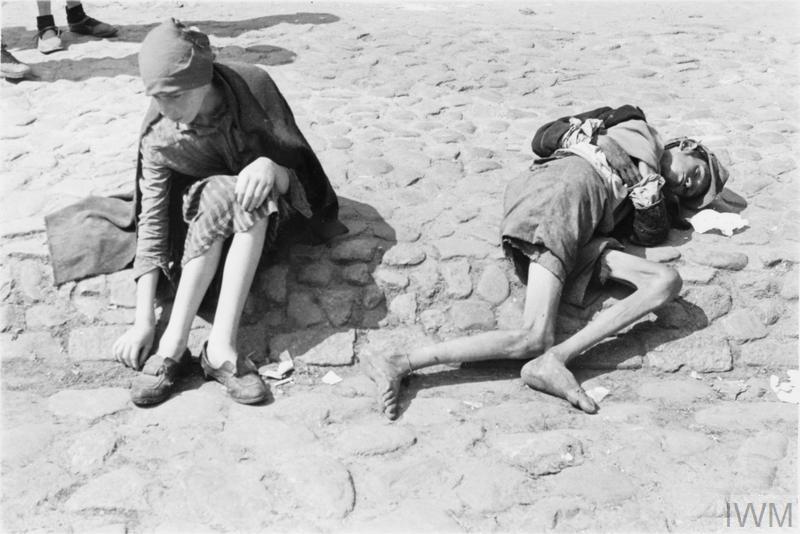
  • The Cup of Water — Dachau Death March, 1945 .US

    The Cup of Water — Dachau Death March, 1945 .US

    The Cup of Water — Dachau Death March, 1945

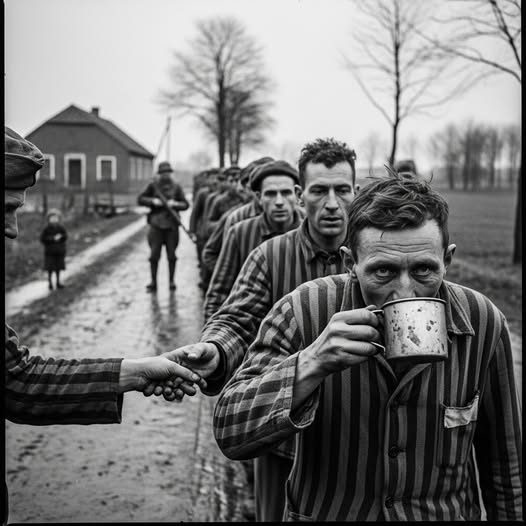
    The road stretched endlessly before them, a ribbon of mud and ice winding through a landscape stripped bare by winter. The men walked in silence, their striped uniforms hanging loose on bodies wasted by hunger, their skin pale with sickness and cold. This was the Dachau Death March of 1945, when thousands of prisoners were driven from the infamous concentration camp as the Nazi regime collapsed in its final days. To many, it was not a march but a slow procession into death itself. Yet within this darkness, a single cup of water became a beacon of humanity, a fragile act of kindness that defied the cruelty surrounding them.

    The prisoners trudged forward with mechanical steps, their feet blistered and swollen, their lungs burning with every ragged breath. Guards shouted orders from behind, rifles ready, their boots echoing like the drumbeat of despair. Snow mixed with mud clung to their ankles, dragging them down. Hunger gnawed at their insides, thirst seared their throats, and exhaustion turned the world into a blur of gray.

    For many, hope had long since died inside the barbed wires of Dachau. The Holocaust had stripped them of families, homes, and even their names, reducing them to numbers sewn crudely onto their uniforms. And now, as they staggered across the frozen countryside, they carried nothing but the fragile thread of survival.

    It was along one such stretch of road, flanked by bare trees and silent farms, that the extraordinary happened. A child, no more than ten years old, stood at the edge of the road. He was not supposed to be there—villagers kept their distance from the prisoners, fearful of punishment. But children, with their instinct for compassion unclouded by politics or fear, often see what adults choose to ignore.

    The boy had placed something small among the stones: a dented tin cup filled with water, glistening faintly under the pale sky. It was nothing in the grand scale of the war, just a sip of water. And yet, for those prisoners, it was the difference between life and despair.

    The first man to notice the cup hesitated. His hands trembled as he reached down, glancing nervously toward the guards. One wrong move could mean a bullet in the back. Still, thirst overcame fear. He lifted the cup, the metal cold against his cracked lips, and took the smallest sip. The water slid down his throat, cool and clean, reviving a body that had nearly forgotten what it meant to feel alive.

    But then something extraordinary happened: he did not drink it all. Instead, he turned and passed it to the man behind him.

    One by one, the cup moved down the line. Each prisoner took only a sip, careful not to drain it completely, mindful of the others who still waited. Every swallow was a rebellion against the inhumanity of the march. Every passing of the cup was an act of solidarity stronger than the iron chains of oppression. In a world where survival often meant selfishness, here was selflessness.

    The Holocaust stories we inherit often speak of horror, loss, and despair. But woven into them are also these quiet moments of humanity—small acts that shine brighter precisely because of the surrounding darkness. That cup of water was no mere drink; it was a reminder that compassion could survive even in a world designed to extinguish it.

    As the cup moved from hand to hand, its physical contents diminished, but its meaning multiplied. The water sustained their bodies, yes, but more than that, it nourished their spirits. It told them they were still human, still capable of kindness and sacrifice. It reminded them that though the Nazis had taken their homes, their families, and their freedom, they had not taken their humanity.

    By the time the last sip was gone, the cup had become more than a vessel of water—it was a vessel of memory, carrying within it the strength of unity, the power of compassion, and the stubborn endurance of the human soul.

    Remarkably, the guards did not intervene. Perhaps they did not notice, or perhaps they chose to ignore it. Perhaps even they, hardened by years of brutality, felt some flicker of humanity stir inside them as they watched starving men share a cup of water instead of fighting over it. History does not record their thoughts, only their silence. But silence itself, in that moment, allowed kindness to flourish.

    When we reflect today on the Dachau death march and countless other atrocities of the Holocaust, it is easy to become overwhelmed by the sheer magnitude of suffering. Over six million Jews, along with millions of others, perished in the Nazi genocide. The statistics are staggering, the cruelty beyond comprehension. But numbers, while important, cannot convey the depth of human loss. Stories like the cup of water do.

    They remind us that even amid systemic dehumanization, individuals chose compassion. They remind us that survival was not only about enduring hunger and cold, but also about holding onto one’s soul. And they remind us that resistance does not always come through weapons or rebellion; sometimes it comes through something as small and fragile as sharing a sip of water.

    The march continued, the cup emptied, but the act of kindness lingered in every heart. Years later, survivors would tell stories of that day, of how one sip of water helped them keep walking, of how passing the cup gave them a reason to hold on one more hour, one more day. That memory rippled outward, carried across generations as part of the collective testimony of the Holocaust.

    In classrooms, museums, and memorials, we speak of the brutality of the Nazis, but we must also speak of the courage and compassion of the prisoners. These survival stories are as essential as the record of atrocities, because they teach us not only what humans are capable of in cruelty, but also what they are capable of in love.

    In our modern world, where divisions still threaten to pull humanity apart, the story of the cup of water offers a timeless lesson. It teaches us that kindness is not measured by its size but by its impact. A simple gesture, offered in the darkest moment, can light a path for others.

    The World War II history that we inherit is not just a chronicle of battles and politics—it is also a moral inheritance. It challenges us to ask: What would we do if we were there? Would we pass the cup?

    Every act of compassion we perform today, however small, echoes that same defiance of cruelty. It affirms that humanity endures not in grand speeches or monuments, but in the quiet choice to care for one another.

    By the time the sun set on that day in 1945, the prisoners still marched on. Many would not survive the journey; others would collapse along the roadside. Yet each man who touched that cup carried with him more than a sip of water. He carried a memory of shared humanity, a reminder that dignity could survive even in the valley of death.

    The cup itself was ordinary, just tin and water. But what it represented was extraordinary. It was proof that in the darkest chapters of Holocaust history, light still flickered. It was proof that in a march designed to break men, compassion kept them walking. And it was proof that even when everything else is taken, the soul of humanity can endure.

    And so, the story of the cup of water lives on—not only as part of the record of Dachau, but as part of the record of humanity itself. A reminder, eternal and unbreakable, that kindness, however small, is never wasted.

    Note: Some content was generated using AI tools (ChatGPT) and edited by the author for creativity and suitability for historical illustration purposes.
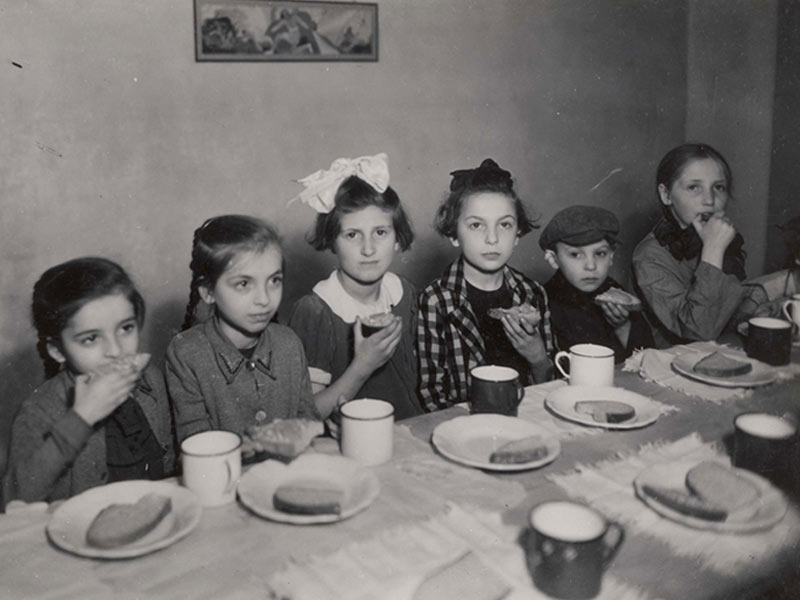
  • The GI Who Carried the Torah — Buchenwald, 1945 .US

    The GI Who Carried the Torah — Buchenwald, 1945 .US

    The GI Who Carried the Torah — Buchenwald, 1945

    In the spring of 1945, as American troops advanced through the heart of Germany, they came upon one of the darkest monuments of the 20th century: Buchenwald concentration camp. Behind barbed wire and stone watchtowers, they found thousands of skeletal survivors, the ruins of a broken people, and the echoes of prayers silenced by gas and fire. But among the shattered remnants of Jewish life, something else emerged—something fragile, sacred, and indestructible.

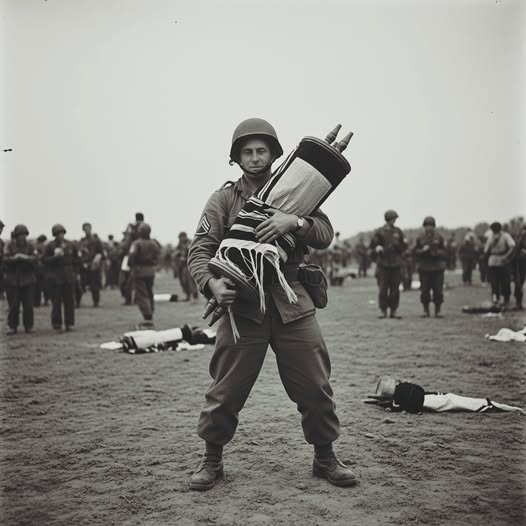
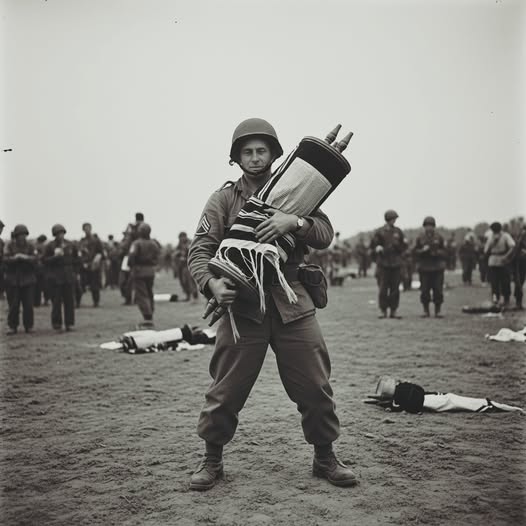
    It came in the form of a Torah scroll, torn and dirt-stained, lying abandoned among the ashes. And it was carried out of that place by an American GI who understood, perhaps more deeply than he could put into words, that this was not just parchment. It was a heartbeat, a memory, a covenant carried through fire and blood.

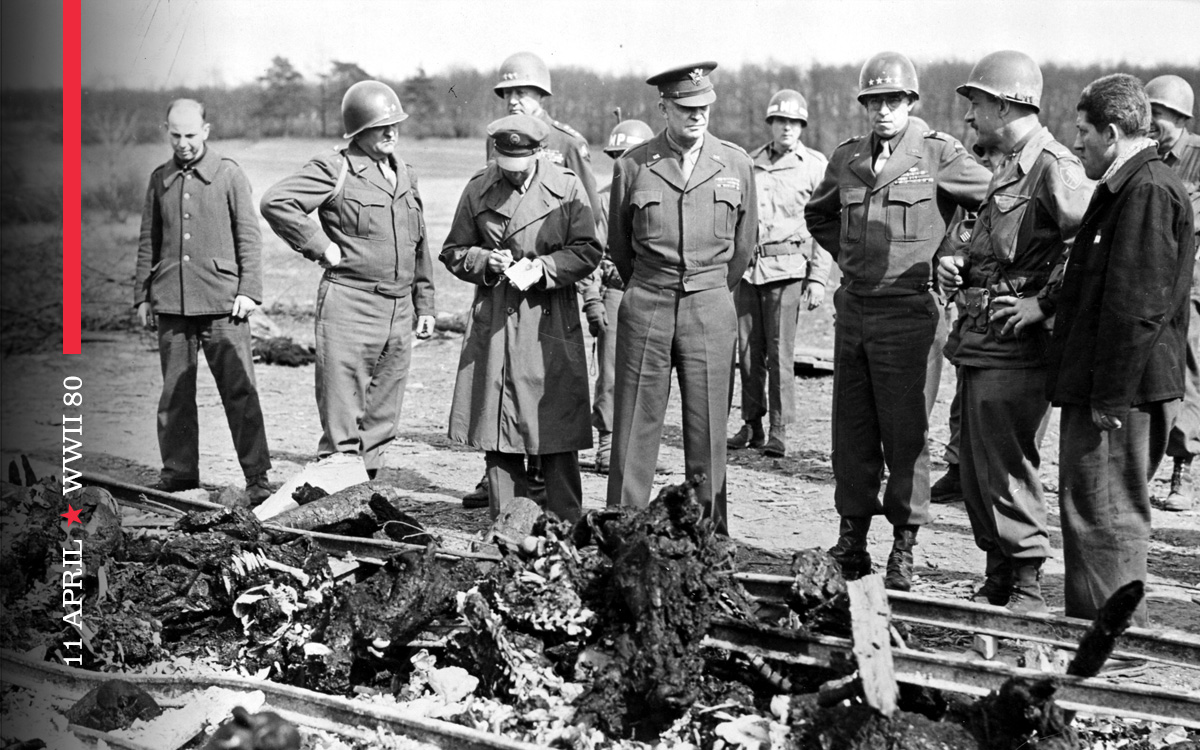
    When the U.S. Army entered Buchenwald on April 11, 1945, they were unprepared for the magnitude of what they would see. Survivors staggered toward the liberators, some too weak to speak, their eyes hollow yet flickering with the faintest trace of hope. Piles of corpses lay unburied. The air reeked of burning flesh. And scattered on the ground, desecrated, were the objects of Jewish worship—prayer shawls, phylacteries, fragments of Torah scrolls.

    For the Nazis, destroying Jewish bodies was not enough. They sought to obliterate Jewish spirit, to grind sacred texts into mud as if to mock God Himself. Yet amid this desecration, a soldier bent down, brushed away the dirt, and lifted a Torah from the ground.

    The GI—his name lost to history in some tellings, remembered in others—was not a rabbi, nor even necessarily Jewish. What mattered was the instinct with which he gathered the scroll into his arms. Witnesses later described how he held it as if it were a wounded comrade-in-arms, carefully protecting its torn edges, unwilling to let it fall again.

    Survivors nearby began to cry. One of them, trembling and gaunt, whispered words that echoed across decades:

    “For the first time in years, our God is lifted, not thrown.”

    Those who had seen their families murdered, their communities annihilated, and their prayers silenced, now saw something extraordinary: a symbol of their identity raised aloft by the very army that had come to crush their oppressors. In that moment, liberation was not only military—it was spiritual.

    The Torah the soldier carried did not remain a relic of despair. Instead, it became a living voice again. After the war, the GI brought it to New York City, donating it to a synagogue that welcomed it as a sacred treasure. Week after week, generation after generation, the scroll has been unrolled and read, its ancient words declaring:

    “And you shall teach them diligently to your children.”

    The parchment once trampled in dirt became a beacon of faith, a Holocaust survivor in its own right. Today, when congregants touch it with their prayer shawls and kiss the spot, they are not only honoring the Torah but also remembering the soldier who refused to let it remain in the dust of Buchenwald.

    Why does this image—the GI with the Torah in his arms—resonate so powerfully? Because it captures the collision of destruction and hope. The Torah is more than ink on parchment. For the Jewish people, it is identity, law, history, and destiny. By carrying it out of a death camp, the soldier affirmed something the Nazis tried and failed to erase: that faith survives even when everything else is taken.

    This act embodies the resilience of the human spirit. It reminds us that while tanks and guns liberated camps, it was also compassion, reverence, and symbolic gestures that gave survivors the courage to believe life could continue.

    The liberation of camps like Buchenwald, Dachau, and Auschwitz did not only reveal the scale of genocide—it entrusted American soldiers with the role of witnesses to history. Many wrote home describing horrors that words could scarcely contain. Others took photographs, ensuring that the world could never claim ignorance.

    But some, like the GI who carried the Torah, went beyond witnessing. They became guardians of memory, rescuing not only lives but also the fragments of a destroyed civilization. In doing so, they connected their own service in World War II with a timeless struggle: the fight for human dignity.

    United States Army soldiers of the 48th Infantry Armored Battalion in St. Vith, Belgium, during the Battle of the Bulge. They are moving through the snow-covered ruined buildings in the town.

    Today, when Holocaust museums and memorials display rescued Torah scrolls, they are not mere artifacts. They are survivors, voices that speak across silence. They tell us that while entire communities were annihilated, their sacred texts live on, prayed over in synagogues from New York to Jerusalem.

    And for every person who hears the story of the GI who carried the Torah, there is a reminder: liberation was not abstract. It was human. It was soldiers who, in the chaos of war, made small but eternal choices—to hold, to carry, to honor.

    In an era when Holocaust denial and distortion still circulate, the image of the GI with the Torah stands as a testimony against forgetting. It tells us that history is not just about statistics—six million murdered—but about symbols, gestures, and acts of defiance against annihilation.

    This is why Holocaust education, Torah preservation, and stories of WWII liberators remain so crucial. They teach us that even when evil seeks to destroy identity, memory can be carried, protected, and passed on.

    In 1945, a young American soldier carried a Torah from the ruins of Buchenwald. Nearly eighty years later, that act continues to speak. It speaks of courage in the face of despair, reverence in the face of desecration, and hope in the face of genocide.

    The scroll itself, once abandoned in filth, now sings weekly in a synagogue—a living reminder that the Jewish people survived, and so did their God.

    The GI who carried the Torah may not have known, in that moment, the full weight of what he was doing. But for the survivors who wept as they saw him lift it high, and for every generation that has since unrolled its pages, his gesture was nothing less than holy.

    In the end, perhaps that is the lesson: that even in humanity’s darkest hours, there are acts of light so bright they echo across time. The soldier carried not only a scroll—he carried the voice of a people, and he ensured that voice would never be silenced again.

    Note: Some content was generated using AI tools (ChatGPT) and edited by the author for creativity and suitability for historical illustration purposes.